Why Meditech & eClinicalWorks Are Slowing Down Interoperability in 2026
21 Apr
Why Meditech & eClinicalWorks Are Slowing Down Interoperability in 2026
In 2026, interoperability remains one of healthcare’s most pressing challenges. Despite regulatory mandates such as the 21st Century Cures Act, the adoption of FHIR-based APIs, and the emergence of national frameworks like TEFCA, many healthcare organizations still struggle to achieve seamless data exchange. A significant portion of these challenges is linked to the operational and architectural complexities of widely used Electronic Health Record (EHR) systems such as MEDITECH and eClinicalWorks.
While these platforms play a critical role in supporting clinical and administrative workflows, variations in legacy infrastructure, interoperability implementations, and integration governance can inadvertently slow the pace of connected care. For healthcare leaders, this results in fragmented patient data, increased administrative burden, and delays in value-based care initiatives.
This article explores why interoperability challenges persist with MEDITECH and eClinicalWorks in 2026, the real-world impact on healthcare organizations, and the strategic steps providers can take, along with partners like Aigilx Health, to enable seamless, compliant, and scalable data exchange.
Why Is Interoperability Still A Challenge In 2026?
Despite years of regulatory mandates and technological advancements, interoperability remains one of healthcare’s most persistent challenges. While standards such as FHIR (Fast Healthcare Interoperability Resources) and regulations like the 21st Century Cures Act have accelerated progress, many healthcare organizations still struggle to exchange data seamlessly.
A significant portion of these challenges stems from the limitations associated with certain Electronic Health Record (EHR) platforms, particularly MEDITECH and eClinicalWorks. These systems are widely used across hospitals and ambulatory settings, but often present integration and data exchange complexities that slow interoperability initiatives.
For healthcare leaders, this translates into:
- Fragmented patient data
- Delayed clinical decision-making
- Increased administrative burden
- Compliance and reporting challenges
- Reduced care coordination
Interoperability is no longer a technical aspiration; it is a strategic necessity for value-based care, population health management, and patient-centric outcomes.
What Interoperability Requirements Are Shaping Healthcare In 2026?
Healthcare interoperability today is driven by a combination of regulatory mandates and industry standards:
1. The 21st Century Cures Act and Information Blocking Rules
The Office of the National Coordinator for Health IT (ONC) requires certified EHR systems to provide standardized APIs and prevent information blocking. Organizations must ensure timely and secure access to electronic health information (EHI).
2. FHIR-Based Data Exchange
FHIR has become the dominant standard for enabling real-time, API-driven data exchange. However, the degree of FHIR implementation varies significantly across EHR vendors, affecting interoperability performance.
3. CMS Interoperability and Prior Authorization Rules
The Centers for Medicare & Medicaid Services (CMS) continues to push for seamless data exchange between providers, payors, and patients, emphasizing transparency and care coordination.
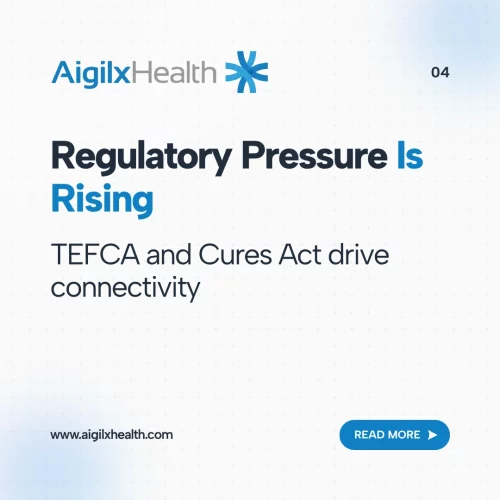
4. TEFCA (Trusted Exchange Framework and Common Agreement)
TEFCA aims to establish a nationwide framework for secure health information exchange. Participation and readiness vary among EHR vendors, influencing interoperability outcomes.
How Do Meditech and eClinicalWorks Contribute to Interoperability Challenges?
It is important to clarify that these platforms are not inherently barriers to interoperability. However, certain architectural and operational characteristics can slow progress when compared to more open ecosystems.
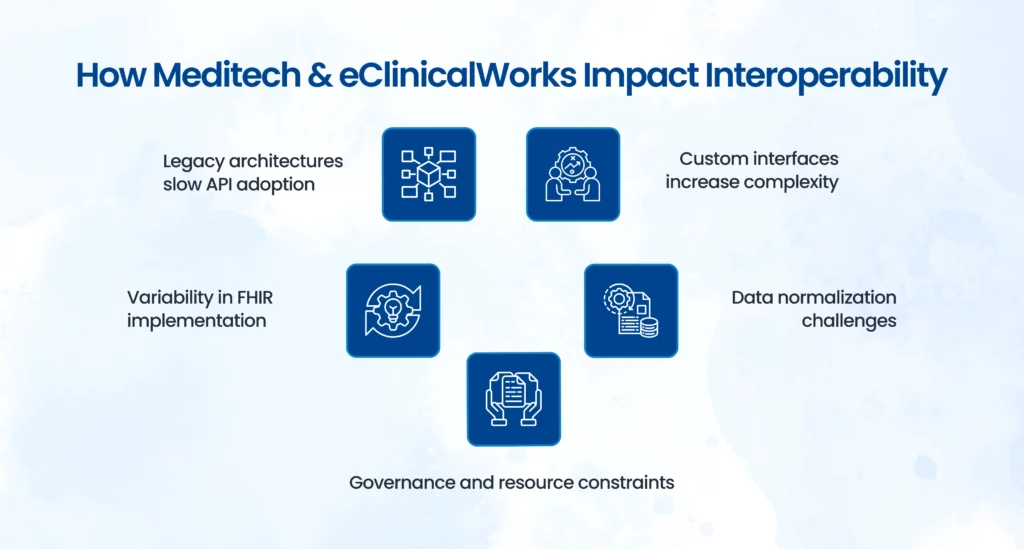
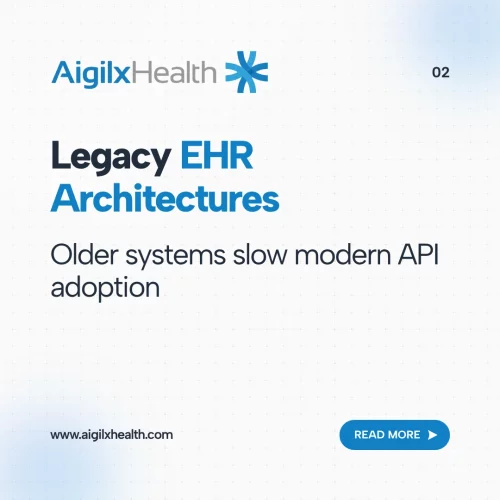
1. Legacy System Architectures
Many healthcare organizations still operate older versions of MEDITECH, such as MAGIC or Client/Server, which were not originally designed for modern API-based integrations. Although newer platforms like MEDITECH Expanse support FHIR, transitions from legacy systems can be complex and resource-intensive.
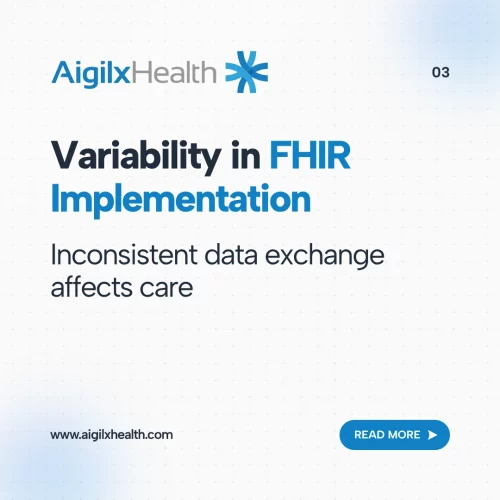
2. Variability in FHIR Implementation
While eClinicalWorks supports FHIR APIs, the depth and consistency of implementation may vary depending on system configuration and organizational readiness. This variability can lead to inconsistent data exchange and integration delays.
3. Custom Interfaces and Integration Complexity
Healthcare organizations often rely on customized HL7 interfaces to connect disparate systems. Maintaining these interfaces increases:
- Implementation timelines
- Operational costs
- Risk of data inconsistencies
- Dependence on vendor-specific configurations
4. Data Normalization and Semantic Interoperability Issues
Even when data is exchanged successfully, differences in clinical terminology, coding standards, and documentation practices can hinder semantic interoperability, limiting the usability of shared information.
5. Resource and Governance Constraints
Interoperability initiatives require strong governance, technical expertise, and financial investment. Organizations using these systems may face additional challenges in scaling integration efforts due to resource limitations.
What Are The Real-World Impacts On Healthcare Organizations?
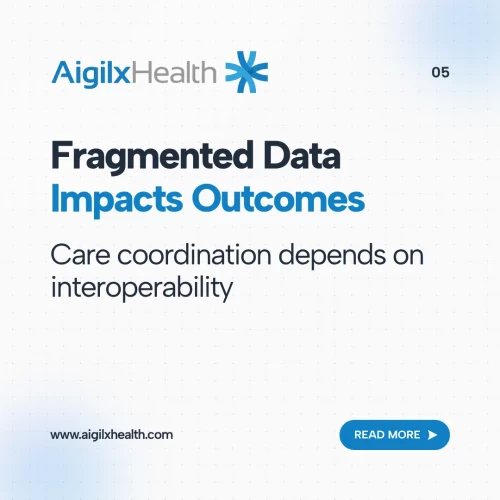
1. Fragmented Patient Records
Incomplete or delayed data exchange leads to gaps in patient histories, affecting clinical decision-making and continuity of care.
2. Increased Administrative Burden
Manual data reconciliation and interface management consume valuable operational resources, diverting attention from patient care.
3. Delayed Value-Based Care Initiatives
Interoperability challenges can hinder population health analytics, quality reporting, and risk-based reimbursement models.
4. Compliance and Regulatory Risks
Failure to meet interoperability and information-blocking requirements may expose organizations to regulatory scrutiny and financial penalties.
5. Limited Patient Engagement
Patients expect seamless access to their health information. Interoperability barriers can negatively impact patient satisfaction and trust.
How Can Healthcare Organizations Overcome These Interoperability Barriers?
1. Implement a FHIR-First Integration Strategy
Adopting a FHIR-first approach enables scalable, standards-based data exchange and reduces reliance on legacy interfaces.
2. Leverage Interoperability Platforms
Integration platforms and middleware can bridge gaps between legacy systems and modern applications, enabling real-time data sharing.
3. Participate in TEFCA and Health Information Exchanges (HIEs)
Engaging with national and regional exchange frameworks enhances connectivity and supports nationwide interoperability.
4. Strengthen Data Governance and Standardization
Establishing consistent data standards and governance frameworks ensures semantic interoperability and improves data quality.
5. Partner with Interoperability Experts
Collaborating with specialized partners like Aigilx Health enables organizations to accelerate integration initiatives, ensure compliance, and maximize the value of their EHR investments.
What Role Does Technology Innovation Play In Accelerating Interoperability?
Emerging technologies are reshaping interoperability strategies:
- API-driven ecosystems enabling real-time data exchange
- Cloud-based integration platforms supporting scalability
- Artificial intelligence for data normalization and analytics
- Automation tools to streamline workflows
- Advanced cybersecurity frameworks ensure secure data sharing
When combined with strategic expertise, these technologies can transform interoperability from a compliance requirement into a competitive advantage.
Why Should Interoperability Be A Strategic Priority For Healthcare Leaders?
Interoperability is directly tied to organizational success. Effective data exchange enables:
- Improved patient outcomes
- Enhanced care coordination
- Operational efficiency
- Regulatory compliance
- Financial sustainability
- Innovation in digital health
Healthcare leaders who prioritize interoperability position their organizations for long-term success in an increasingly connected ecosystem.
How Aigilx Health Enables Seamless Interoperability?
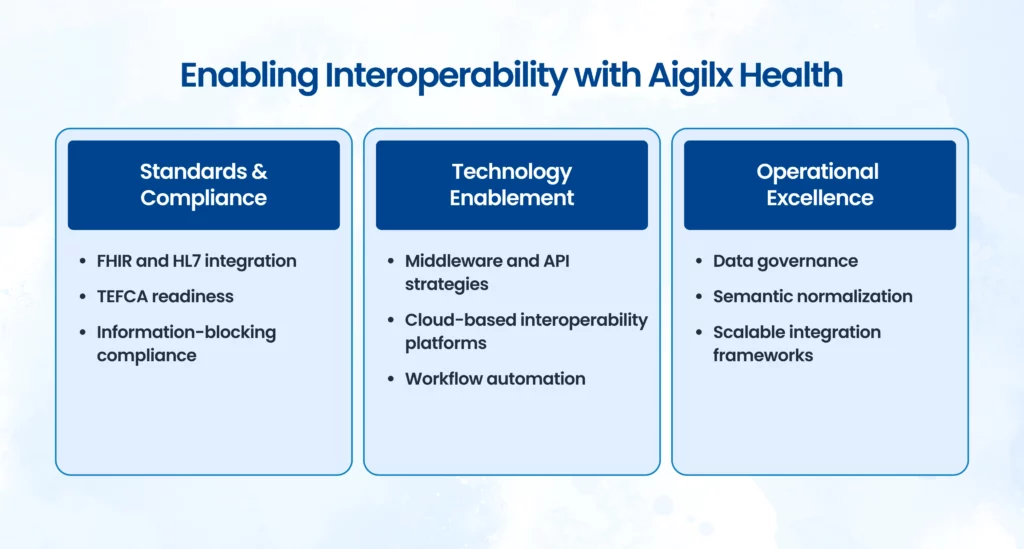
Aigilx Health supports healthcare organizations in overcoming interoperability challenges through:
- FHIR and HL7 integration expertise
- EHR optimization and migration support
- TEFCA and regulatory readiness
- Data governance and normalization
- Advanced analytics and automation
By aligning technology, governance, and clinical workflows, Aigilx Health helps organizations unlock the full potential of their health data.
How Can You Move Forward With Confidence As A Healthcare Leader?
Interoperability challenges associated with MEDITECH and eClinicalWorks should not be viewed as insurmountable barriers. Instead, they highlight the need for a strategic, standards-based approach to integration.
The right strategy will:
- Break down data silos
- Ensure regulatory compliance
- Enhance patient care
- Enable scalable innovation
- Deliver measurable ROI
With the right expertise and governance, interoperability becomes a catalyst for transformation rather than a persistent obstacle.
How Can You Move Forward With Confidence As A Healthcare Leader?
No. Both systems support interoperability standards such as HL7 and FHIR. However, legacy architectures, configuration variability, and integration complexity can slow seamless data exchange.
Key standards include FHIR, HL7, TEFCA participation, and compliance with the 21st Century Cures Act and CMS interoperability rules.
They can lead to fragmented patient records, delayed clinical decisions, increased administrative burden, and reduced care coordination.
Adopting a FHIR-first strategy, leveraging integration platforms, strengthening data governance, and partnering with interoperability experts are critical steps.
Seamless data exchange enables population health management, quality reporting, risk stratification, and coordinated care—key components of value-based care models.
Aigilx Health provides interoperability consulting, EHR integration, regulatory readiness, and data governance solutions that enable scalable and compliant healthcare data exchange.
Categories
- 1115 Waiver (8)
- ACO (7)
- AI (48)
- Aigilx Health (48)
- CCBHC (8)
- Control Center (10)
- FHIR Facade (7)
- FHIR Server (14)
- HIE (5)
- Payers (8)
- Providers (11)
- Rapid Fire (9)

ISO 27001:2022 Certified
Aigilx health specializes in developing Interoperability solutions to create a healthcare ecosystem and aids in the delivery of efficient, patient-centric and population-focused healthcare.