Safer Care Transitions with FHIR: Sharing Discharge Summaries Securely in 2026
27 May
Safer Care Transitions with FHIR: Sharing Discharge Summaries Securely
Care transitions remain one of the most vulnerable points in the healthcare journey. Whether a patient is discharged from a hospital, transferred to a rehabilitation center, or referred to a specialist, gaps in communication can lead to medication errors, delayed follow-ups, duplicated tests, and preventable readmissions.
In 2026, healthcare organizations are under increasing pressure to improve continuity of care while maintaining strict data security and compliance standards. However, many providers still rely on fragmented systems, manual discharge processes, fax-based communication, and delayed information exchange.
This is where FHIR (Fast Healthcare Interoperability Resources) is transforming care transitions.
FHIR enables healthcare organizations to securely exchange discharge summaries and patient data in real time across systems, providers, and care teams. By improving interoperability, providers can reduce communication gaps, strengthen post-discharge care coordination, and improve patient safety during transitions of care.
As healthcare becomes increasingly connected, FHIR is becoming essential for safer and more efficient care transitions.
What Is FHIR in Care Transition Management?
FHIR (Fast Healthcare Interoperability Resources) is a modern healthcare interoperability standard designed to simplify secure healthcare data exchange between systems and applications.
Unlike traditional integration methods that depend on delayed file transfers or manual workflows, FHIR uses API-driven architecture to support real-time access to clinical information.
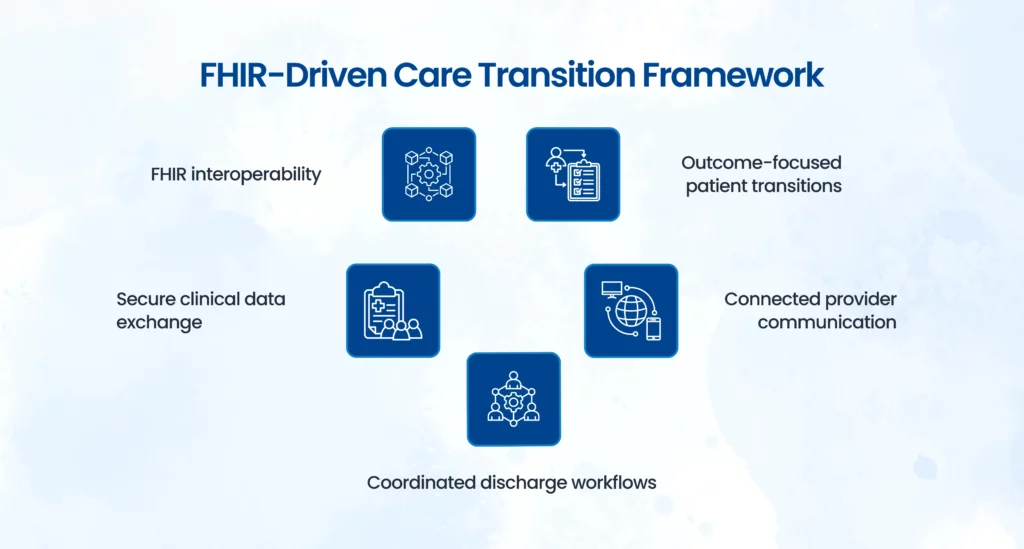
In care transition workflows, FHIR supports:
- Secure discharge summary sharing
- Real-time patient record exchange
- Medication reconciliation
- Cross-provider care coordination
- Post-discharge follow-up management
- Referral communication
- Interoperable clinical documentation
- Scalable healthcare integrations
FHIR allows healthcare organizations to move from disconnected transitions to coordinated, patient-centered care delivery.
Why Care Transitions Matter in Healthcare
Care transitions occur whenever responsibility for a patient shifts between providers, facilities, or care settings.
Examples include:
- Hospital discharge to home care
- Transfer to rehabilitation facilities
- Emergency department referrals
- Specialist follow-ups
- Skilled nursing transitions
- Behavioral health referrals
- Primary care coordination
Poorly managed transitions can result in:
- Readmissions
- Medication conflicts
- Missed follow-up appointments
- Delayed treatment plans
- Incomplete patient histories
- Communication breakdowns
- Increased healthcare costs
Improving information exchange during these transitions has become a major priority for healthcare organizations focused on quality outcomes and patient safety.
FHIR helps solve these challenges through secure, standardized interoperability.
Why Discharge Summary Sharing Is Often Inefficient
Many healthcare organizations still struggle with outdated discharge communication processes.
Common challenges include:
- Fax-based documentation
- Delayed discharge summary delivery
- Inconsistent clinical formats
- Manual care coordination
- Siloed EHR systems
- Missing medication updates
- Incomplete patient histories
- Limited visibility across providers
These gaps can negatively affect both operational efficiency and patient outcomes.
FHIR modernizes discharge workflows by enabling secure and real-time clinical data exchange.
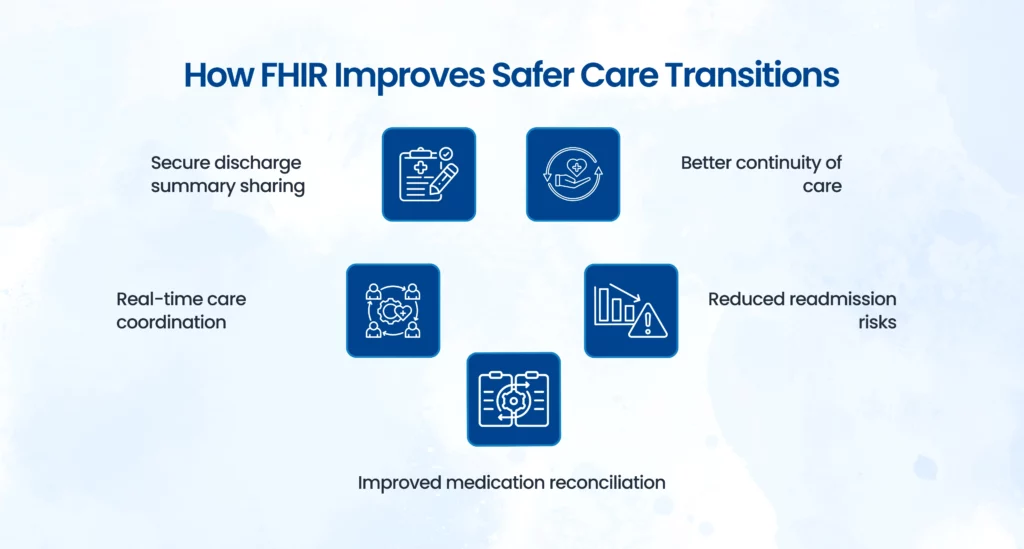
How FHIR Improves Safer Care Transitions
1. Secure Real-Time Discharge Summary Exchange
FHIR enables healthcare providers to securely share discharge summaries immediately after patient discharge.
This improves access to:
- Diagnosis information
- Treatment summaries
- Medication instructions
- Follow-up care plans
- Lab results
- Imaging reports
- Allergy information
- Referral recommendations
Real-time information sharing helps reduce delays and improves continuity of care across providers.
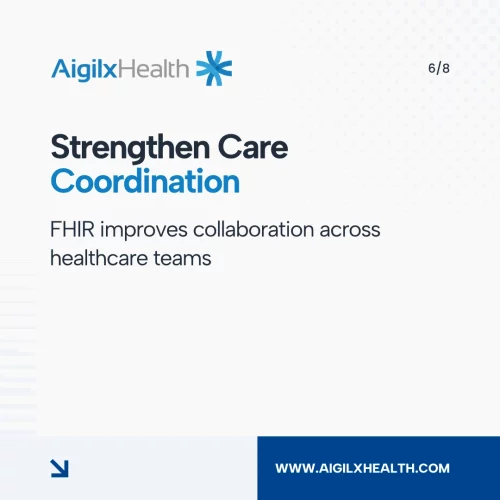
2. Improved Care Coordination Across Teams
Care transitions often involve multiple providers and departments.
FHIR strengthens communication between:
- Hospitals
- Primary care providers
- Specialists
- Rehabilitation centers
- Behavioral health teams
- Home healthcare providers
- Skilled nursing facilities
- Care coordinators
Connected patient information improves collaboration and reduces fragmentation during transitions.
3. Better Medication Reconciliation
Medication errors are one of the leading risks during care transitions.
FHIR helps providers access updated medication records in real time, improving:
- Prescription accuracy
- Medication reconciliation workflows
- Drug interaction visibility
- Patient adherence tracking
- Coordination between pharmacies and providers
This reduces preventable medication-related complications after discharge.
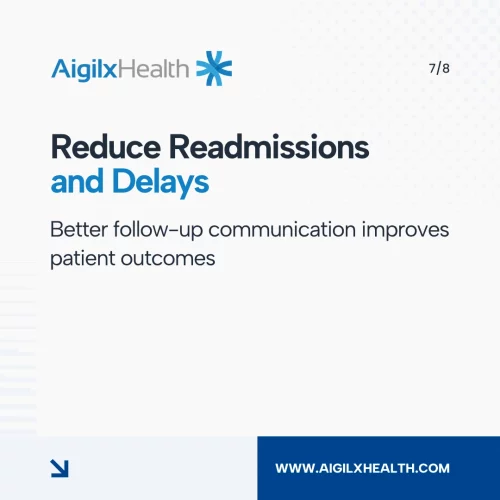
4. Reduced Hospital Readmissions
Incomplete communication after discharge is a major contributor to avoidable readmissions.
FHIR-enabled interoperability supports:
- Faster follow-up coordination
- Improved discharge planning
- Better patient monitoring
- Early intervention opportunities
- Enhanced continuity of care
Connected data exchange helps organizations improve post-discharge outcomes while reducing operational costs.
The Role of FHIR in Secure Healthcare Data Exchange
Security and compliance remain critical priorities in healthcare interoperability.
FHIR supports secure data exchange through:
- API-based access controls
- Authentication and authorization frameworks
- Role-based data access
- Secure encrypted communication
- Audit logging capabilities
- Consent-based data sharing
FHIR frameworks can align with regulatory and privacy requirements while enabling faster interoperability across healthcare ecosystems.
How FHIR Supports Value-Based Care Transitions
In 2026, healthcare organizations are increasingly measured on patient outcomes and continuity of care.
FHIR supports value-based care initiatives through:
- Improved discharge coordination
- Better outcome tracking
- Reduced readmissions
- Enhanced patient engagement
- Accurate quality reporting
- Interoperable care documentation
Connected interoperability helps organizations deliver more efficient and outcome-focused healthcare experiences.
Common Care Transition Gaps in Healthcare
1. Delayed Discharge Communication
Providers may not receive critical patient information in time.
2. Fragmented Patient Records
Disconnected systems reduce visibility into complete patient histories.
3. Medication Errors
Incomplete medication data increases patient safety risks.
4. Poor Follow-Up Coordination
Patients often miss follow-up care due to communication breakdowns.
5. Limited Interoperability
Legacy systems create barriers to secure data sharing.
FHIR helps healthcare organizations address these challenges through modern interoperability frameworks.
Key Benefits of FHIR for Safer Care Transitions
Improved Patient Safety
Real-time information sharing reduces communication gaps and clinical risks.
Better Continuity of Care
Connected systems support coordinated treatment across providers.
Reduced Administrative Burden
FHIR automates workflows previously dependent on manual processes.
Faster Clinical Decision-Making
Providers gain timely access to critical patient information.
Scalable Healthcare Interoperability
FHIR supports long-term digital transformation and connected care initiatives.
How Aigilx Health Supports FHIR-Based Care Transition Strategies
Aigilx Health helps healthcare organizations modernize interoperability through:
- FHIR-first integration strategies
- Secure discharge workflow modernization
- API development and optimization
- Care coordination interoperability
- Workflow automation
- Clinical data exchange frameworks
- Real-time interoperability solutions
By helping providers create connected healthcare ecosystems, Aigilx Health supports safer and more efficient care transitions.
Why FHIR Is Becoming Essential for Care Transitions in 2026
Healthcare organizations can no longer rely on fragmented discharge workflows and disconnected systems.
Providers investing in interoperability gain advantages in:
- Patient safety
- Readmission reduction
- Care coordination
- Operational efficiency
- Value-based care readiness
- Scalable healthcare innovation
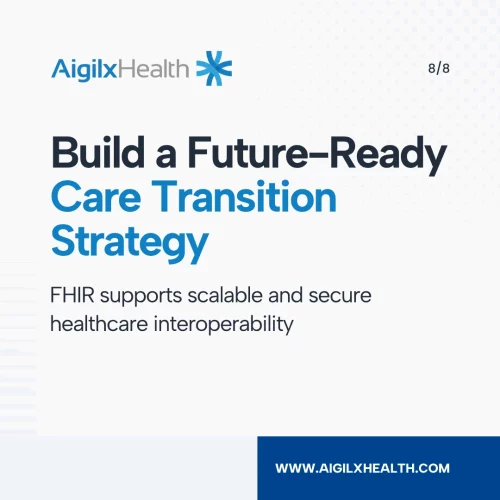
FHIR is becoming the foundation for secure and connected healthcare transitions across modern care delivery environments.
How Can Healthcare Organizations Improve Care Transitions?
Organizations seeking safer care transitions should focus on:
- Assessing interoperability gaps
- Modernizing discharge workflows
- Implementing FHIR-based APIs
- Strengthening care coordination processes
- Improving medication reconciliation
- Enhancing patient follow-up systems
- Building scalable interoperability strategies
With the right interoperability approach and healthcare technology partner, providers can improve patient outcomes while creating more connected and efficient care delivery systems.
FAQs
FHIR is a healthcare interoperability standard that enables secure, real-time data exchange between healthcare systems and applications.
FHIR enables providers to securely exchange discharge summaries instantly across connected healthcare systems.
Care transitions directly affect patient safety, continuity of care, treatment outcomes, and hospital readmission rates.
FHIR improves communication, discharge coordination, medication reconciliation, and follow-up care management.
Yes. FHIR supports secure authentication, encrypted communication, access controls, and compliance-focused interoperability frameworks.
Aigilx Health provides FHIR integration, workflow automation, secure healthcare interoperability solutions, and care coordination modernization.
Categories
- 1115 Waiver (8)
- ACO (7)
- AI (48)
- Aigilx Health (48)
- CCBHC (8)
- Control Center (10)
- FHIR Facade (7)
- FHIR Server (14)
- HIE (5)
- Payers (8)
- Providers (11)
- Rapid Fire (9)

ISO 27001:2022 Certified
Aigilx health specializes in developing Interoperability solutions to create a healthcare ecosystem and aids in the delivery of efficient, patient-centric and population-focused healthcare.