eClinicalWorks and the Information Blocking Risk Your Practice May Not Know About
24 Apr
eClinicalWorks and the Information Blocking Risk Your Practice May Not Know About
In 2026, healthcare organizations are under increasing pressure to comply with interoperability mandates while ensuring seamless, secure data exchange. Regulations tied to the 21st Century Cures Act have made information blocking a critical compliance priority, with significant financial and reputational risks for non-compliance.
However, many practices using eClinicalWorks may unknowingly face exposure not because of intentional actions, but due to system configurations, workflow limitations, and incomplete interoperability implementations.
While eClinicalWorks plays a vital role in enabling clinical and administrative operations, gaps in data accessibility, API usage, and governance can create unintended barriers to information sharing. For healthcare leaders, this introduces compliance risks, operational inefficiencies, and potential audit exposure.
This article explores the hidden information blocking risks associated with eClinicalWorks, how they impact your practice, and what steps you can take along with partners like Aigilx Health to ensure compliance, transparency, and scalable interoperability.
How can eClinicalWorks create unintended information blocking risks?
It is important to clarify that eClinicalWorks is not inherently non-compliant. However, certain operational and technical realities can create risk if not proactively managed.
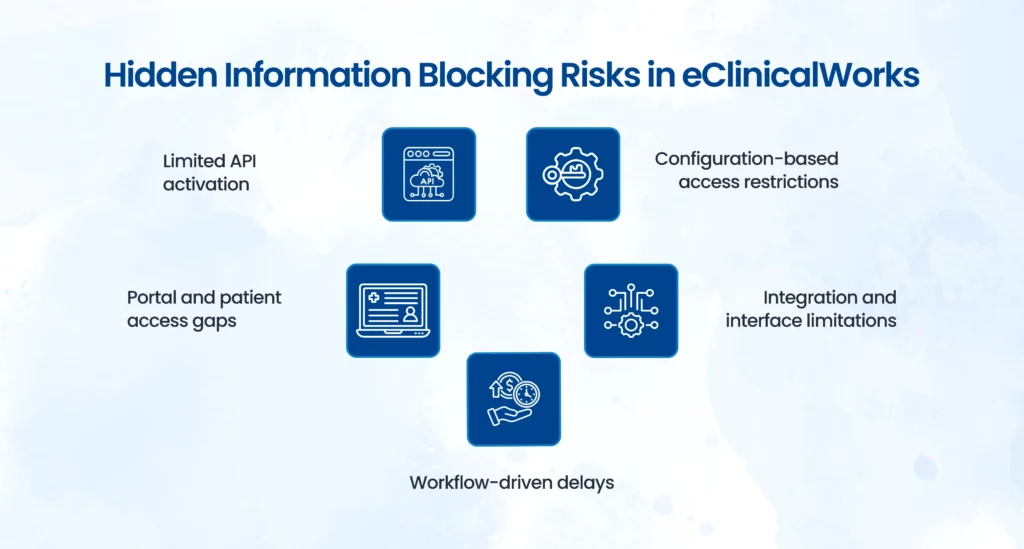
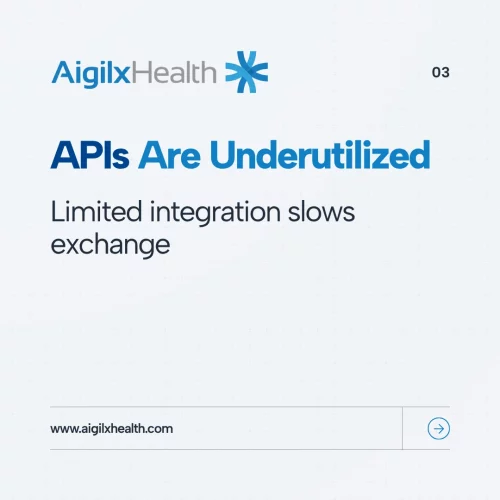
1. Limited API Utilization
Although eClinicalWorks supports FHIR-based APIs, many practices do not fully activate or optimize these capabilities. This results in:
- Restricted third-party access
- Delayed data sharing
- Incomplete interoperability workflows
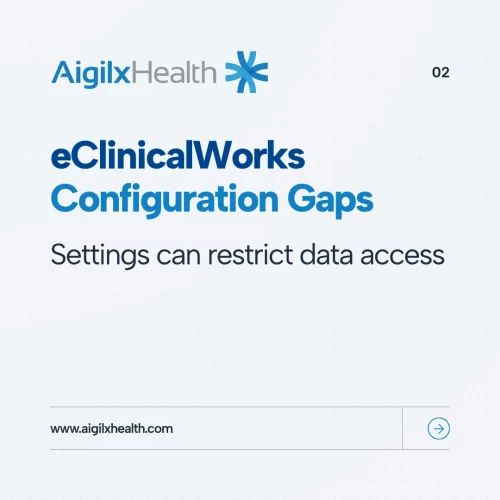
2. Configuration-Driven Access Restrictions
System configurations often designed for security or workflow control can unintentionally restrict access to EHI. If data is not made available when required, it may be considered information blocking.
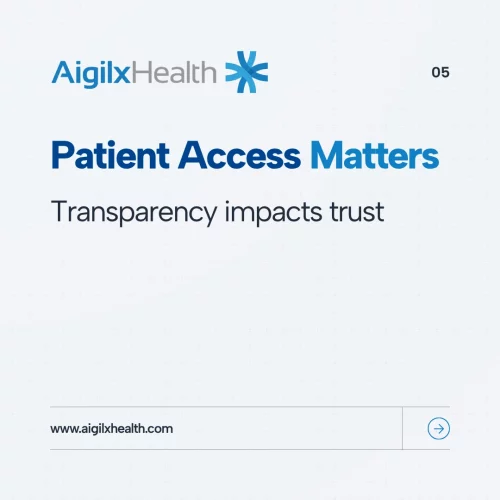
3. Patient Access and Portal Limitations
Patients are entitled to timely electronic access to their health information. Delays in portal access, incomplete data availability, or usability issues can create compliance risks.
4. Interface and Integration Gaps
Reliance on custom HL7 interfaces instead of standardized APIs can:
- Slow data exchange
- Create inconsistencies
- Limit scalability
- Increase maintenance complexity
5. Workflow and Operational Barriers
Even when technology supports interoperability, internal workflows can create bottlenecks:
- Manual approval processes
- Delayed record sharing
- Lack of standardized protocols
If workflows prevent timely access, they can still be classified as information blocking.
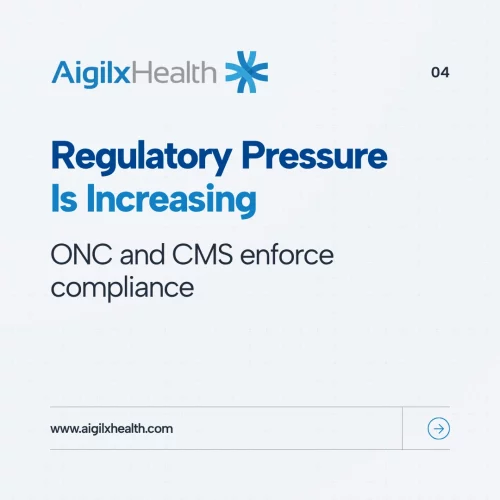
What regulatory requirements should your practice be aware of?
1. ONC Information Blocking Rule
The ONC mandates that certified health IT systems must not interfere with the access, exchange, or use of EHI unless specific exceptions apply.
2. The 21st Century Cures Act
This legislation requires healthcare organizations to:
- Provide patient access to data
- Enable API-based interoperability
- Avoid unnecessary restrictions on data exchange
3. CMS Interoperability Rules
The Centers for Medicare & Medicaid Services emphasizes transparency, patient access, and data sharing across the care continuum.
4. TEFCA Framework
The Trusted Exchange Framework and Common Agreement (TEFCA) is establishing nationwide standards for secure health information exchange.
Failure to align with these requirements can lead to audits, penalties, and reputational damage.
What are the real-world consequences of information blocking?
1. Regulatory Penalties and Audits
Non-compliance can trigger investigations and financial penalties, especially as enforcement becomes more stringent.
2. Delayed Patient Care
When data is not readily accessible, clinicians may lack critical information, impacting diagnosis and treatment decisions.
3. Increased Administrative Burden
Manual processes to retrieve and share data increase operational inefficiencies and staff workload.
4. Reduced Patient Trust
Patients expect transparency and control over their health information. Limited access can erode trust and satisfaction.
5. Missed Value-Based Care Opportunities
Interoperability gaps can hinder quality reporting, care coordination, and population health initiatives.
How can your practice reduce information blocking risk?
1. Activate and Optimize FHIR APIs
Ensure that your eClinicalWorks system fully supports standardized API access for third-party integrations and patient applications.
2. Conduct Interoperability Audits
Regularly evaluate your system configurations, workflows, and data access policies to identify potential compliance gaps.
3. Improve Patient Data Access
Enhance portal functionality and ensure patients can easily access complete and timely health information.
4. Replace Legacy Interfaces with Modern Integration Strategies
Shift from custom HL7 interfaces to scalable, API-driven integration frameworks.
5. Establish Strong Data Governance
Implement policies that ensure consistent, compliant, and transparent data access across the organization.
6. Partner with Interoperability Experts
Working with experts like Aigilx Health helps ensure compliance, optimize system performance, and reduce risk.
What role does technology play in preventing information blocking?
Technology should act as an enabler of compliance, not a barrier.
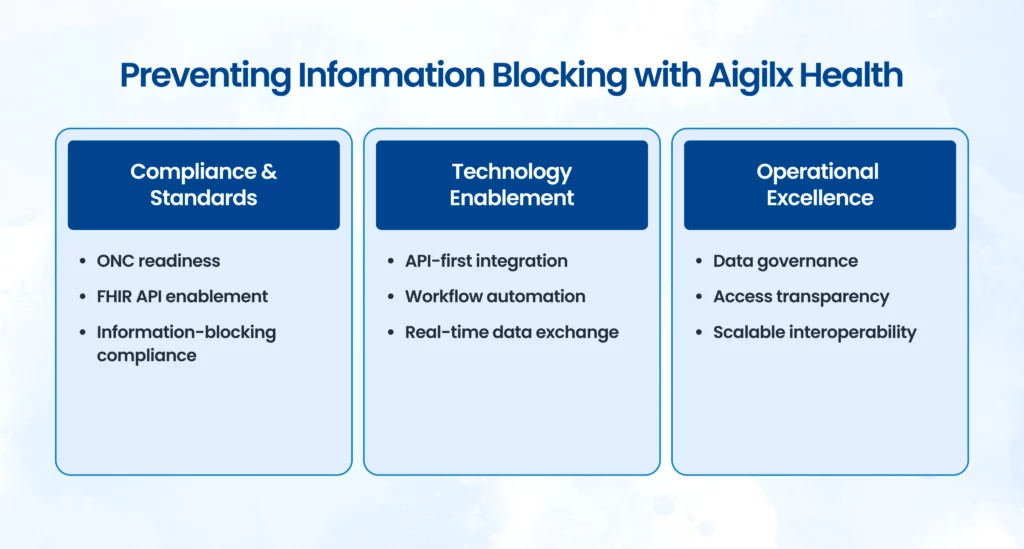
Key capabilities include:
- Real-time API-based data exchange
- Automated audit trails for data access
- Workflow automation to eliminate delays
- Analytics for identifying access bottlenecks
- Security frameworks that balance access and protection
When implemented correctly, technology ensures both compliance and operational efficiency.
Why should healthcare leaders treat information blocking as a strategic priority?
Information blocking is no longer just a compliance checkbox. It directly impacts:
- Patient experience
- Clinical outcomes
- Financial performance
- Regulatory standing
- Organizational reputation
Leaders who proactively address these risks position their organizations for long-term success in a connected healthcare ecosystem.
How Aigilx Health Helps You Stay Compliant and Interoperable
Aigilx Health supports practices using eClinicalWorks by:
- Enabling FHIR-based interoperability
- Conducting compliance and interoperability assessments
- Optimizing EHR configurations and workflows
- Supporting TEFCA and ONC readiness
- Implementing scalable integration architectures
By aligning technology, workflows, and compliance requirements, Aigilx Health helps organizations eliminate information blocking risks while improving performance.
How can you move forward with confidence?
Information blocking risks within eClinicalWorks are often hidden but they are not unavoidable.
With the right strategy, your practice can:
- Ensure regulatory compliance
- Improve patient access and satisfaction
- Reduce operational inefficiencies
- Enable scalable interoperability
- Strengthen audit readiness
The key is to move from reactive compliance to proactive interoperability.
How Can You Move Forward With Confidence As A Healthcare Leader?
Information blocking refers to practices that prevent or delay access to electronic health information, violating ONC regulations unless a valid exception applies.
Not directly, but improper configurations, limited API use, and workflow inefficiencies can create conditions that lead to information blocking risks.
Delayed patient access, restricted third-party integrations, manual approval processes, and incomplete data sharing are common indicators.
By optimizing APIs, improving workflows, conducting audits, and aligning with ONC and CMS requirements.
Penalties may include financial fines, audits, and reputational damage, depending on the severity and enforcement actions.
Aigilx Health provides interoperability consulting, compliance assessments, and integration solutions to reduce information blocking risk and improve data exchange.
Categories
- 1115 Waiver (8)
- ACO (7)
- AI (48)
- Aigilx Health (48)
- CCBHC (8)
- Control Center (10)
- FHIR Facade (7)
- FHIR Server (14)
- HIE (5)
- Payers (8)
- Providers (11)
- Rapid Fire (9)

ISO 27001:2022 Certified
Aigilx health specializes in developing Interoperability solutions to create a healthcare ecosystem and aids in the delivery of efficient, patient-centric and population-focused healthcare.