Top FHIR Implementation Challenges Healthcare Providers Face And How to Solve Them
24 Jun
Top FHIR Implementation Challenges Healthcare Providers Face And How to Solve Them
Healthcare organizations across the United States are accelerating interoperability modernization efforts in 2026. As healthcare systems become increasingly connected, FHIR (Fast Healthcare Interoperability Resources) is emerging as the foundation for secure, API-driven healthcare data exchange.
However, while many healthcare providers recognize the importance of interoperability, successful FHIR implementation remains a significant challenge.
Hospitals, health systems, specialty clinics, behavioral healthcare organizations, and rural providers are all navigating growing pressure from CMS interoperability mandates, digital health expansion, value-based care initiatives, and rising patient expectations.
For many healthcare leaders, the problem is no longer whether to adopt FHIR. The challenge is how to implement it successfully without disrupting operations, increasing risk, or overwhelming internal teams.
FHIR implementation requires more than simply enabling APIs. It involves governance, workflow redesign, integration strategy, security planning, infrastructure modernization, and long-term interoperability alignment.
Healthcare organizations that fail to address these challenges proactively may struggle with fragmented systems, compliance exposure, operational inefficiencies, and delayed digital transformation.
Understanding the most common FHIR implementation challenges can help healthcare providers build smarter, more scalable modernization strategies.
What Is FHIR in Healthcare?
FHIR stands for Fast Healthcare Interoperability Resources.
It is a modern healthcare interoperability standard designed to help healthcare systems exchange clinical and operational data securely and in real time.
FHIR enables standardized communication between healthcare applications, EHR systems, payer platforms, telehealth solutions, analytics tools, and digital health applications.
FHIR supports healthcare data exchange for:
- Patient records
- Lab results
- Medication histories
- Clinical notes
- Imaging data
- Care plans
- Referral information
- Claims and billing workflows
- Population health data
- Social determinants of health (SDOH) information
Unlike legacy healthcare integrations that rely heavily on custom interfaces and manual workflows, FHIR uses modern API-based communication models that improve scalability and interoperability.
Why FHIR Adoption Is Accelerating in 2026?
Healthcare interoperability is rapidly becoming a strategic operational requirement.
Several industry trends are increasing urgency around FHIR implementation, including:
- CMS interoperability mandates
- API-driven healthcare modernization
- Growth of telehealth ecosystems
- Expansion of value-based care models
- Rising demand for patient access to healthcare data
- Population health management initiatives
- Healthcare AI and analytics adoption
- Connected care coordination strategies
As healthcare ecosystems become increasingly data-driven, organizations operating with disconnected systems face growing operational and compliance challenges.
FHIR provides a scalable framework for healthcare modernization.
However, implementation is often more complex than many organizations initially expect.
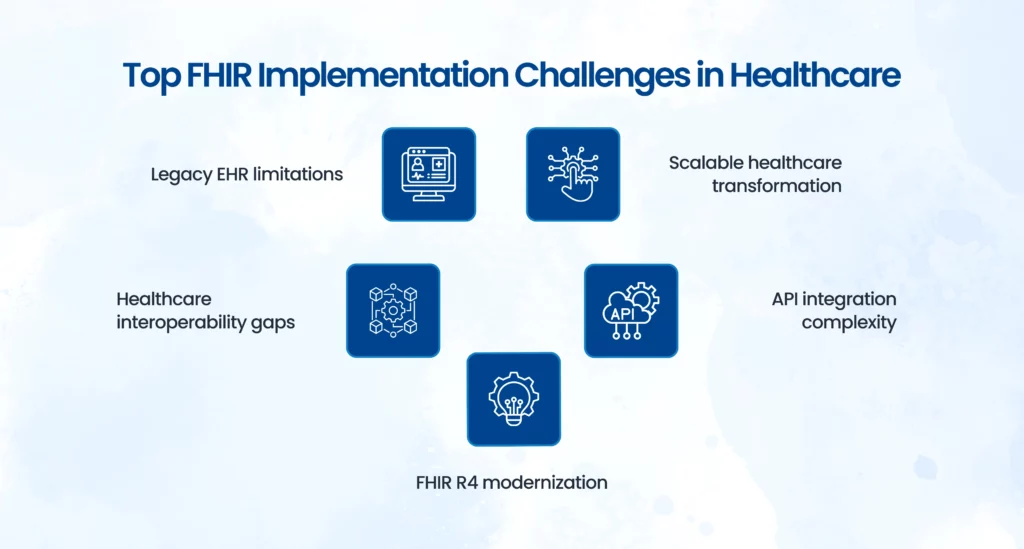
Top FHIR Implementation Challenges Healthcare Providers Face
1. Legacy EHR Infrastructure Limitations
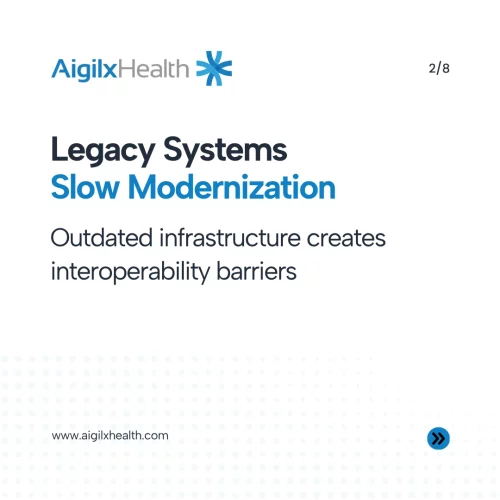
One of the biggest interoperability barriers healthcare organizations face is outdated EHR infrastructure.
Many healthcare providers still rely on older systems with:
- Limited API functionality
- Proprietary integration models
- Inconsistent data structures
- Poor interoperability support
- Custom legacy interfaces
These limitations make FHIR integration significantly more difficult.
Older healthcare systems were not designed for modern real-time interoperability requirements.
How To Solve It
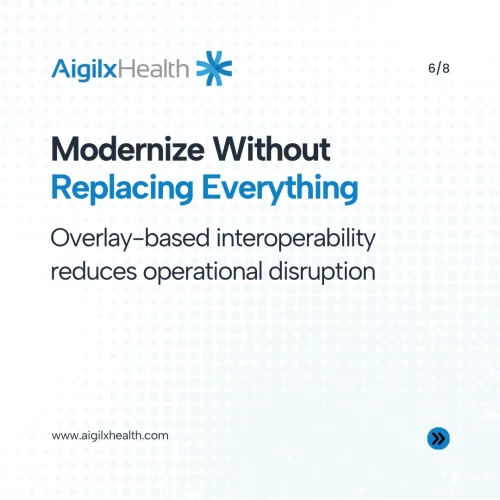
Healthcare organizations should focus on overlay-based modernization strategies rather than immediate full-system replacement.
This includes:
- Adding interoperability layers over existing systems
- Implementing phased FHIR APIs
- Prioritizing high-impact workflows first
- Gradually modernizing integration architecture
Incremental modernization reduces operational disruption while improving interoperability readiness over time.
2. Data Standardization Challenges
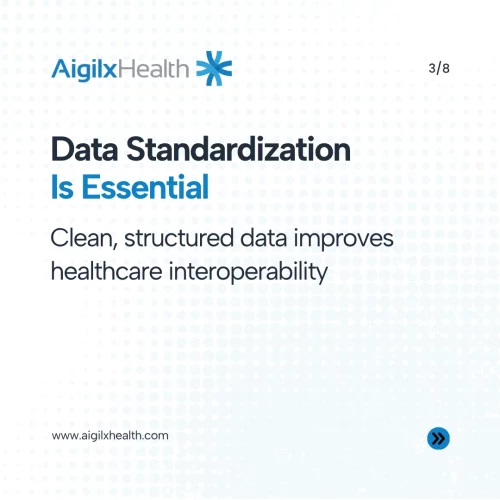
FHIR implementation often exposes inconsistencies in healthcare data structures across systems.
Healthcare organizations frequently struggle with:
- Duplicate patient records
- Inconsistent terminology usage
- Poor data quality
- Fragmented documentation workflows
- Non-standardized clinical information
Even with FHIR-enabled APIs, inconsistent data can create interoperability gaps.
How To Solve It
FHIR implementation often exposes inconsistencies in healthcare data structures across systems.
Healthcare organizations frequently struggle with:
- Duplicate patient records
- Inconsistent terminology usage
- Poor data quality
- Fragmented documentation workflows
- Non-standardized clinical information
Even with FHIR-enabled APIs, inconsistent data can create interoperability gaps.
3. Limited Internal FHIR Expertise
Many healthcare organizations lack experienced interoperability teams.
FHIR implementation requires specialized expertise in:
- API architecture
- Healthcare integration workflows
- Security frameworks
- Clinical data mapping
- SMART on FHIR integration
- Healthcare compliance requirements
Smaller hospitals and rural healthcare organizations often face even greater staffing limitations.
How To Solve It
Healthcare providers should invest in:
- Interoperability training programs
- External implementation partners
- Incremental knowledge transfer strategies
- Cross-functional modernization teams
Organizations that combine operational leadership, clinical stakeholders, and IT teams tend to achieve stronger interoperability outcomes.
4. Security and Compliance Concerns
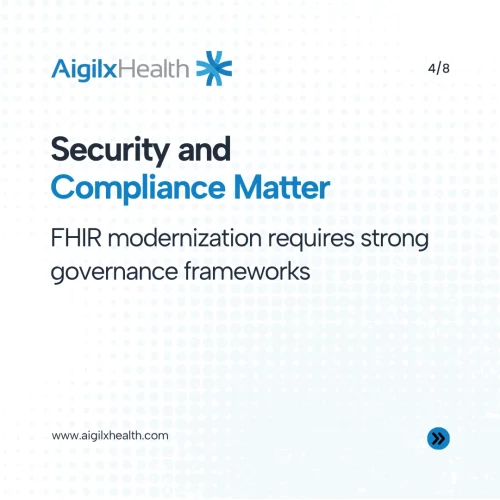
Healthcare interoperability increases the complexity of healthcare data exchange.
As APIs expand connectivity between systems, organizations must carefully manage:
- Patient privacy protections
- HIPAA compliance requirements
- Authentication protocols
- Access control frameworks
- Third-party application security
- Data-sharing governance
Security concerns are one of the primary reasons some healthcare providers delay FHIR adoption.
How To Solve It
Healthcare organizations should build interoperability security frameworks that include:
- Role-based access controls
- API authentication standards
- Continuous monitoring systems
- Encryption protocols
- SMART on FHIR security implementation
- Vendor risk assessments
Security planning should be integrated into interoperability strategies from the beginning.
5. Integration Complexity Across Multiple Vendors
Most healthcare organizations operate fragmented vendor ecosystems.
Different departments may use separate systems for:
- EHR management
- Revenue cycle operations
- Population health
- Telehealth
- Behavioral healthcare
- Imaging systems
- Care coordination workflows
These disconnected technologies often create complex interoperability environments.
How To Solve It
Healthcare providers should prioritize interoperability architecture standardization.
This includes:
- Reducing redundant integrations
- Centralizing API governance
- Building scalable integration frameworks
- Standardizing vendor interoperability requirements
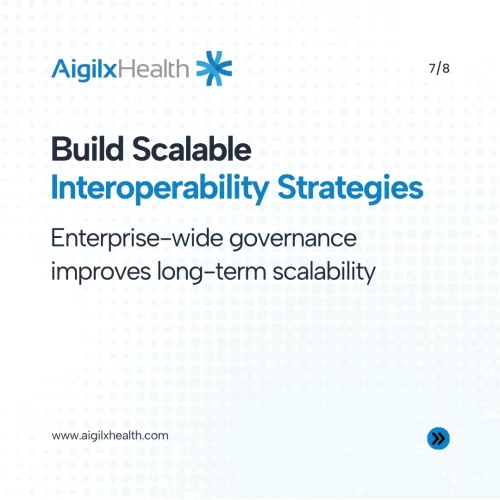
FHIR works best when healthcare organizations adopt enterprise-wide interoperability strategies rather than isolated integrations.
6. Operational Workflow Disruption
FHIR modernization can impact existing healthcare workflows.
Without proper planning, organizations may experience:
- Staff resistance
- Workflow confusion
- Temporary productivity declines
- Care coordination disruption
- Reporting inconsistencies
Healthcare teams already operating under staffing pressure may struggle to adapt quickly.
How To Solve It
Successful FHIR implementation requires phased operational change management.
Healthcare organizations should:
- Modernize incrementally
- Prioritize clinician usability
- Involve operational stakeholders early
- Provide workflow training
- Pilot interoperability initiatives before scaling
Technology modernization succeeds when operational workflows evolve alongside infrastructure.
7. Budget Constraints and ROI Concerns
FHIR implementation requires investment in technology, integration services, governance, and modernization planning.
Many healthcare leaders struggle to justify interoperability investments because ROI may not appear immediately.
Smaller hospitals and community healthcare organizations often face significant budget limitations.
How To Solve It
Healthcare providers should focus on high-impact interoperability use cases first.
Examples include:
- Referral management
- Patient access workflows
- Care coordination
- Analytics visibility
- Claims automation
- Telehealth integration
Organizations that prioritize measurable operational improvements often build stronger long-term modernization momentum.
8. Difficulty Scaling Interoperability Initiatives
Some healthcare organizations successfully implement small interoperability projects but struggle to scale them enterprise-wide.
This often happens because interoperability efforts become fragmented across departments.
How To Solve It
Healthcare providers should establish long-term interoperability roadmaps that include:
- Enterprise governance structures
- Standardized API frameworks
- Cross-functional leadership alignment
- Scalable integration architecture
- Future-ready infrastructure planning
FHIR implementation should support broader digital transformation goals rather than isolated technical upgrades.
Why SMART on FHIR Matters?
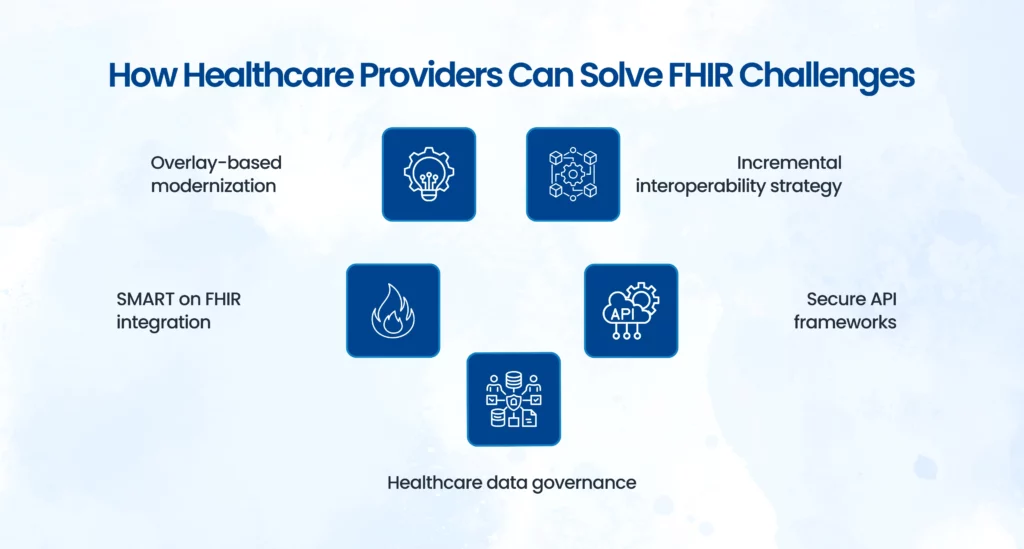
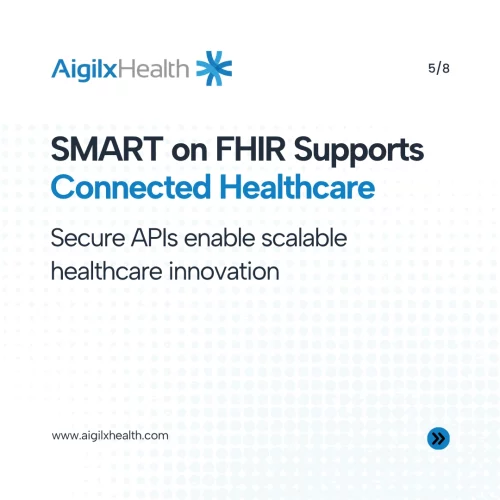
SMART on FHIR is becoming increasingly important for healthcare modernization.
SMART on FHIR enables healthcare organizations to integrate third-party applications securely into existing healthcare environments.
Benefits include:
- Real-time clinical data access
- Secure authentication workflows
- Better provider experiences
- Improved patient engagement
- Faster digital health innovation
For healthcare providers, SMART on FHIR creates a more scalable path toward connected healthcare ecosystems.
How Overlay-Based Modernization Reduces FHIR Risk?
One of the biggest misconceptions about interoperability modernization is that healthcare organizations must replace core infrastructure completely.
In reality, many providers now adopt overlay-based modernization strategies.
This approach allows healthcare organizations to:
- Modernize incrementally
- Protect existing infrastructure investments
- Reduce operational disruption
- Improve scalability gradually
- Accelerate interoperability readiness
Overlay-based modernization is especially valuable for healthcare organizations operating with limited budgets and staffing resources.
Signs Your Healthcare Organization May Need FHIR Modernization
Healthcare leaders should evaluate whether their organization experiences:
- Frequent manual data entry
- Delayed referrals
- Duplicate patient records
- Limited analytics visibility
- Disconnected healthcare applications
- Integration bottlenecks
- Difficulty supporting digital health tools
- Slow care coordination workflows
- Compliance reporting challenges
These are often indicators of growing interoperability limitations.
Best Practices for Successful FHIR Implementation
Healthcare organizations pursuing interoperability modernization should focus on:
Assessing Existing Integration Gaps
Identify disconnected systems and inefficient workflows.
Prioritizing High-Impact Workflows
Start with operational areas that create the greatest interoperability value.
Building Strong Governance Frameworks
Establish interoperability standards, ownership models, and security policies.
Adopting Incremental Modernization Strategies
Avoid large-scale disruption by modernizing gradually.
Strengthening Data Quality
Improve standardization and healthcare data consistency.
Aligning Clinical and Technical Teams
Successful interoperability requires collaboration across departments.
Investing in Scalable Architecture
Future-ready interoperability frameworks support long-term digital transformation.
Why FHIR Implementation Is Becoming Essential?
In 2026, interoperability is no longer simply an IT initiative.
FHIR implementation now directly impacts:
- Care coordination
- Operational efficiency
- Regulatory readiness
- Patient experience
- Digital health innovation
- Healthcare analytics
- Value-based care participation
- Long-term scalability
Healthcare organizations that modernize proactively will be better positioned for future healthcare transformation.
Conclusion
FHIR implementation is becoming essential for healthcare organizations navigating interoperability modernization in 2026.
However, successful adoption requires more than enabling APIs.
Healthcare providers must address challenges related to legacy infrastructure, data governance, security, workflow modernization, integration complexity, and scalability.
The good news is that healthcare organizations do not need to modernize everything at once.
Through phased interoperability strategies and overlay-based modernization approaches, providers can strengthen interoperability readiness while protecting existing infrastructure investments.
FHIR is rapidly becoming the foundation for connected, scalable, and future-ready healthcare ecosystems.
Organizations that address implementation challenges early will be better prepared for the future of healthcare delivery.
FAQs
FHIR implementation involves enabling standardized healthcare data exchange between systems using Fast Healthcare Interoperability Resources (FHIR) APIs and interoperability frameworks.
Common challenges include legacy systems, poor data standardization, limited interoperability expertise, integration complexity, security concerns, and operational disruption.
SMART on FHIR is a framework that allows healthcare applications to integrate securely with healthcare systems using FHIR standards.
No. Many healthcare organizations use overlay-based modernization strategies to add FHIR interoperability without replacing core EHR infrastructure.
Interoperability improves care coordination, operational efficiency, patient access to data, compliance readiness, and digital health scalability.
Major challenges include disconnected systems, inconsistent healthcare data, manual workflows, fragmented vendor ecosystems, and outdated infrastructure.
Categories
- 1115 Waiver (8)
- ACO (7)
- AI (40)
- Aigilx Health (40)
- CCBHC (8)
- Control Center (10)
- FHIR Facade (7)
- FHIR Server (14)
- HIE (5)
- Payers (8)
- Providers (11)
- Rapid Fire (9)

ISO 27001:2022 Certified
Aigilx health specializes in developing Interoperability solutions to create a healthcare ecosystem and aids in the delivery of efficient, patient-centric and population-focused healthcare.