Why FHIR Clinical Data Repositories Matter for Modern Healthcare Organizations?
12 Jun
Why FHIR Clinical Data Repositories Matter for Modern Healthcare Organizations?
Healthcare organizations are managing larger volumes of clinical data than ever before. From electronic health records and lab results to imaging systems, wearable devices, and care coordination platforms, modern healthcare environments depend on continuous data exchange across multiple systems and providers.
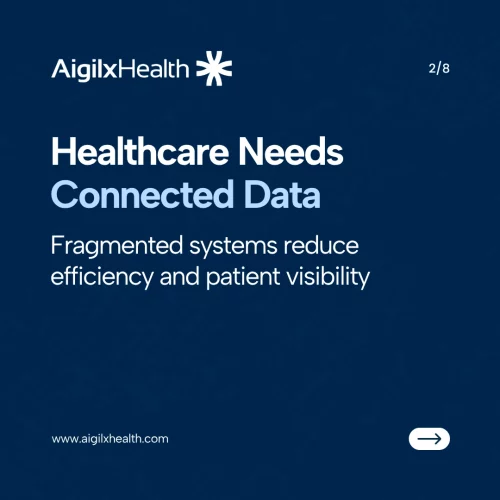
However, many organizations still struggle with fragmented healthcare data, disconnected applications, inconsistent interoperability standards, and delayed access to patient information. These challenges create inefficiencies that affect clinical workflows, operational performance, patient outcomes, and healthcare innovation.
In 2026, healthcare organizations are increasingly adopting FHIR Clinical Data Repositories (CDRs) to solve these interoperability and data management challenges.
FHIR-based Clinical Data Repositories provide centralized, standardized, and API-driven access to healthcare data across systems and applications. By enabling real-time interoperability, scalable analytics, and connected healthcare ecosystems, FHIR CDRs are becoming foundational to digital transformation strategies across the healthcare industry.
As healthcare moves toward value-based care, predictive analytics, population health management, and AI-driven decision-making, organizations need modern data infrastructure capable of supporting connected and intelligent healthcare delivery.
FHIR Clinical Data Repositories are helping make that transformation possible.
What Is a FHIR Clinical Data Repository?
A Clinical Data Repository (CDR) is a centralized platform used to aggregate, manage, standardize, and exchange healthcare data from multiple clinical systems.
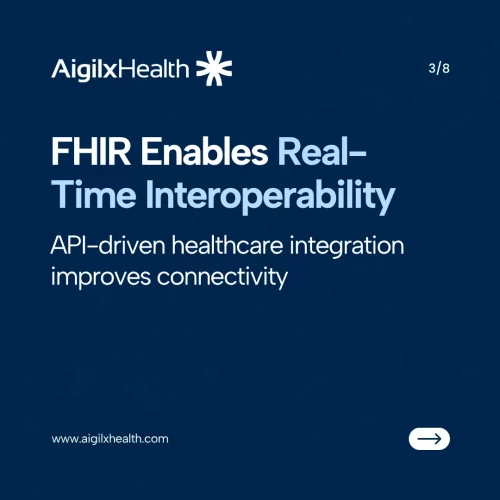
A FHIR Clinical Data Repository uses FHIR (Fast Healthcare Interoperability Resources) standards to structure and exchange healthcare information in real time through secure APIs.
Unlike traditional healthcare databases that often rely on rigid legacy integrations and siloed architectures, FHIR-based repositories support modern interoperability and scalable data accessibility.
FHIR CDRs typically manage:
- Electronic health records (EHRs)
- Clinical documentation
- Medication histories
- Laboratory results
- Imaging data
- Care coordination records
- Claims and payer information
- Social determinants of health (SDOH)
- Patient-generated health data
- Remote monitoring information
By centralizing and standardizing healthcare data, organizations gain a more complete and accessible view of patient information across the continuum of care.
Why Modern Healthcare Organizations Need FHIR Clinical Data Repositories
Healthcare organizations today operate within highly complex ecosystems involving multiple providers, technologies, departments, and external partners.
Common challenges include:
- Fragmented patient records
- Legacy interoperability limitations
- Inconsistent healthcare data formats
- Delayed data exchange
- Limited analytics capabilities
- Poor care coordination
- Duplicate documentation workflows
- Data governance complexities
- Rising operational inefficiencies
Traditional data infrastructures often cannot support the growing demands of modern healthcare delivery.
FHIR Clinical Data Repositories help organizations create scalable interoperability frameworks that improve connectivity, accessibility, and healthcare intelligence.
How FHIR Clinical Data Repositories Improve Healthcare Operations
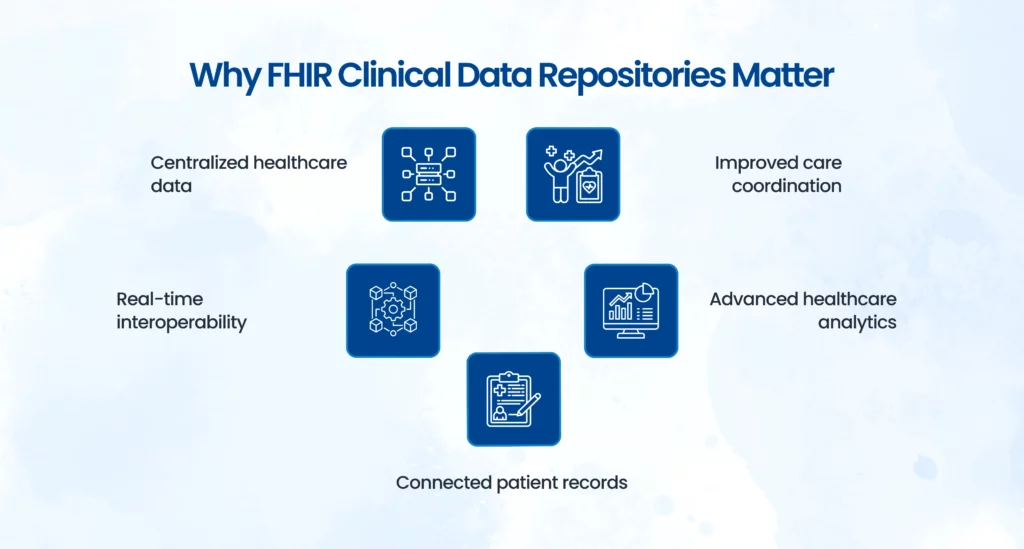
1. Centralized Access to Healthcare Data
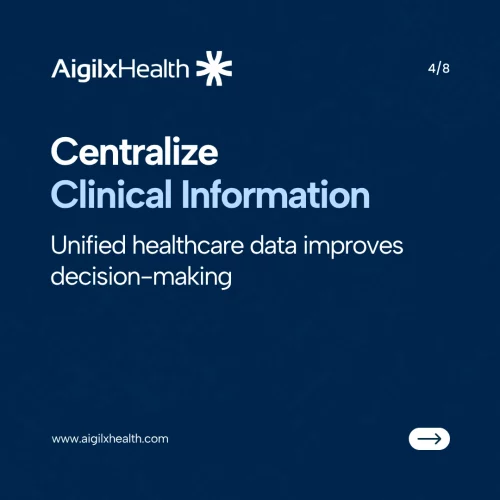
FHIR CDRs aggregate patient information from multiple systems into a unified repository.
This provides healthcare organizations with:
- Comprehensive patient visibility
- Faster access to clinical information
- Reduced duplicate records
- Improved data consistency
- Simplified information retrieval
Clinicians can access more complete patient histories, improving decision-making and reducing delays in care delivery.
2. Real-Time Interoperability Across Systems
FHIR APIs enable real-time healthcare data exchange between:
- EHR platforms
- Hospital systems
- Behavioral health systems
- Payer platforms
- Telehealth applications
- Remote monitoring tools
- Population health platforms
- Care coordination systems
Real-time interoperability improves collaboration and reduces communication gaps across healthcare ecosystems.
3. Improved Care Coordination
Disconnected systems often create fragmented patient experiences.
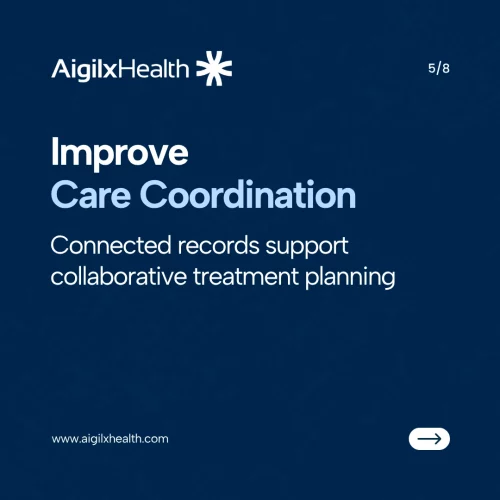
FHIR Clinical Data Repositories support coordinated care by enabling providers to access shared patient information across organizations and care teams.
This improves:
- Referral management
- Care transitions
- Chronic disease management
- Emergency response coordination
- Collaborative treatment planning
- Longitudinal patient tracking
Connected healthcare data helps organizations deliver more patient-centered care experiences.
4. Enhanced Healthcare Analytics
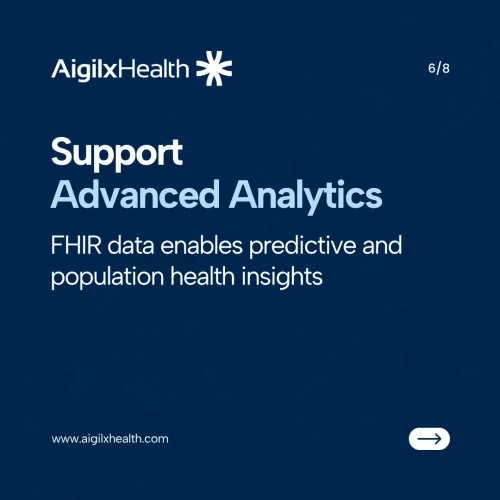
FHIR CDRs create structured and standardized data environments that support advanced analytics initiatives.
Organizations can leverage FHIR-enabled analytics for:
- Population health management
- Risk stratification
- Predictive analytics
- Operational performance monitoring
- Quality reporting
- Readmission analysis
- Clinical trend identification
- Resource optimization
Standardized healthcare data improves the reliability and scalability of analytics programs.
The Role of FHIR CDRs in Population Health Management
Population health management depends on access to accurate, connected, and actionable healthcare data.
FHIR Clinical Data Repositories help organizations:
- Identify high-risk populations
- Monitor chronic conditions
- Detect care gaps
- Track preventive care measures
- Improve patient outreach
- Measure treatment outcomes
- Support value-based care initiatives
Without connected interoperability frameworks, population health strategies often remain limited by incomplete or delayed data access.
FHIR enables organizations to build more proactive and data-driven care models.
Why FHIR Matters More Than Legacy Interoperability Standards
Traditional healthcare interoperability approaches often rely on complex custom integrations, batch-based data exchange, and fragmented workflows.
FHIR introduces a modern API-driven framework that offers:
- Faster implementation
- Standardized data models
- Scalable integration capabilities
- Real-time communication
- Improved developer flexibility
- Easier third-party application integration
- Cloud-native interoperability support
FHIR enables healthcare organizations to modernize interoperability without relying entirely on rigid legacy architectures.
Supporting AI and Digital Health Innovation
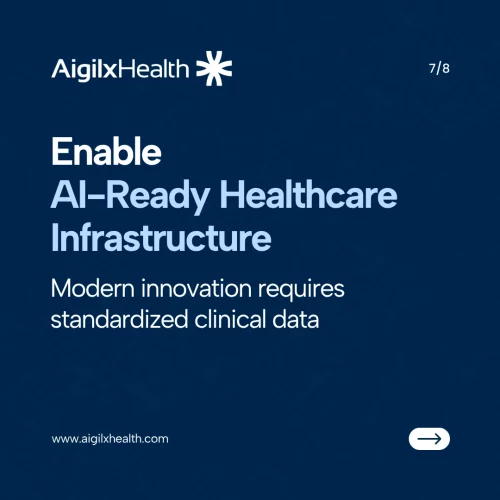
Healthcare organizations are increasingly investing in AI, machine learning, automation, and digital health initiatives.
However, these technologies depend heavily on high-quality and accessible healthcare data.
FHIR Clinical Data Repositories support innovation by enabling:
- AI-ready data environments
- Structured clinical datasets
- Real-time decision support
- Automated workflow integration
- Predictive modeling
- Remote patient monitoring integration
- Intelligent care coordination
Modern healthcare innovation requires modern interoperability infrastructure.
FHIR CDRs provide the data foundation necessary for scalable digital transformation.
The Importance of Data Standardization in Healthcare
Healthcare organizations often struggle with inconsistent data structures across systems and vendors.
FHIR standardization improves:
- Data quality
- Information consistency
- Cross-platform compatibility
- Reporting accuracy
- Analytics reliability
- Regulatory compliance readiness
Standardized healthcare data helps reduce operational complexity while improving interoperability scalability.
Common Challenges Healthcare Organizations Face Without FHIR CDRs
1. Fragmented Clinical Data
Patient information remains isolated across multiple systems and departments.
2. Delayed Access to Information
Providers may lack timely access to critical healthcare data.
3. Limited Analytics Visibility
Disconnected systems reduce reporting accuracy and operational insight.
4. Complex Integration Costs
Legacy integrations often require expensive customization and maintenance.
5. Poor Patient Experience
Fragmented workflows create inefficiencies that impact patient engagement and continuity of care.
FHIR Clinical Data Repositories help organizations address these challenges through centralized interoperability strategies.
Key Benefits of FHIR Clinical Data Repositories
Improved Patient Outcomes
Connected healthcare data supports faster and more informed clinical decisions.
Enhanced Operational Efficiency
FHIR reduces inefficiencies caused by fragmented systems and manual workflows.
Scalable Interoperability
Modern APIs enable easier integration across healthcare ecosystems.
Better Healthcare Analytics
Organizations gain access to actionable, real-time clinical insights.
Stronger Care Coordination
Shared patient visibility improves collaboration across providers and departments.
Future-Ready Digital Infrastructure
FHIR supports long-term healthcare modernization and innovation initiatives.
How Aigilx Health Supports FHIR Clinical Data Repository Modernization
Aigilx Health helps healthcare organizations modernize interoperability infrastructure through:
- FHIR-first integration strategies
- Clinical Data Repository implementation
- API modernization
- Healthcare analytics enablement
- Workflow automation
- Care coordination optimization
- Data governance support
- Scalable interoperability frameworks
By helping organizations build connected healthcare ecosystems, Aigilx Health supports sustainable digital transformation initiatives across modern healthcare environments.
Why FHIR Clinical Data Repositories Are Essential in 2026
Healthcare organizations are rapidly transitioning toward connected, intelligent, and outcome-driven care delivery models.
Organizations that invest in modern interoperability infrastructure gain advantages in:
- Clinical efficiency
- Data accessibility
- Population health performance
- AI readiness
- Value-based care support
- Operational scalability
- Patient engagement
- Healthcare innovation
FHIR Clinical Data Repositories are no longer optional technology investments.
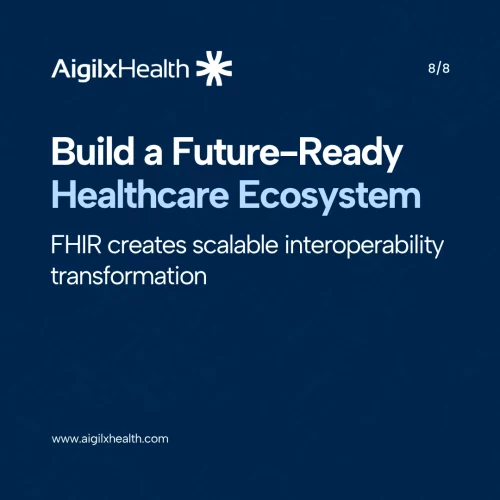
They are becoming critical infrastructure for modern healthcare organizations seeking to improve interoperability, analytics, and patient-centered care delivery.
How Can Healthcare Organizations Move Forward?
Successful interoperability transformation begins with a clear healthcare data strategy.
Healthcare organizations should focus on:
- Assessing interoperability gaps
- Modernizing legacy systems
- Implementing FHIR APIs
- Centralizing healthcare data access
- Strengthening analytics capabilities
- Improving data governance
- Supporting scalable digital transformation
With the right interoperability strategy and technology partner, healthcare organizations can create connected ecosystems that improve both clinical outcomes and operational performance.
FAQs
A FHIR Clinical Data Repository is a centralized healthcare data platform that uses FHIR standards to enable secure, real-time interoperability across healthcare systems and applications.
FHIR CDRs improve interoperability, streamline data access, enhance analytics capabilities, and support coordinated patient care.
FHIR uses standardized APIs that enable real-time healthcare data exchange between systems, providers, and applications.
CDRs centralize and standardize healthcare data, making it easier to perform analytics, predictive modeling, and population health reporting.
FHIR CDRs help reduce fragmented records, delayed data exchange, integration complexity, and disconnected workflows.
Aigilx Health provides FHIR implementation, Clinical Data Repository modernization, API integration, healthcare analytics, and interoperability consulting services.
Categories
- 1115 Waiver (8)
- ACO (7)
- AI (48)
- Aigilx Health (48)
- CCBHC (8)
- Control Center (10)
- FHIR Facade (7)
- FHIR Server (14)
- HIE (5)
- Payers (8)
- Providers (11)
- Rapid Fire (9)

ISO 27001:2022 Certified
Aigilx health specializes in developing Interoperability solutions to create a healthcare ecosystem and aids in the delivery of efficient, patient-centric and population-focused healthcare.