How FHIR and SDOH Data Improve Patient Care in 2026?
10 Jun
How Social Determinants of Health Data on FHIR Improve Patient Care?
Healthcare organizations are increasingly recognizing that medical care alone does not determine patient outcomes. In 2026, factors such as housing stability, food security, transportation access, employment conditions, education, and social support play a major role in shaping overall health outcomes.
These non-medical factors are known as Social Determinants of Health (SDOH), and healthcare providers are now prioritizing ways to integrate this information into clinical decision-making and population health strategies.
However, many healthcare systems still struggle with fragmented SDOH data, disconnected technologies, inconsistent documentation, and limited interoperability between care teams and community organizations. Without connected access to social and clinical insights, providers often miss opportunities to deliver proactive, personalized care.
This is where FHIR (Fast Healthcare Interoperability Resources) is transforming modern healthcare delivery.
FHIR enables standardized, secure, and real-time exchange of healthcare data across systems and applications. By integrating SDOH data into interoperable healthcare ecosystems, organizations can improve patient engagement, strengthen care coordination, enhance population health analytics, and support value-based care initiatives.
As healthcare continues moving toward patient-centered and outcome-driven models, FHIR-powered SDOH integration is becoming essential for improving care quality and long-term patient outcomes.
What Are Social Determinants of Health (SDOH)?
Social Determinants of Health refer to the environmental, economic, and social conditions that influence individual and population health outcomes.
Common SDOH factors include:
- Housing instability
- Food insecurity
- Transportation challenges
- Financial stress
- Employment conditions
- Education access
- Community safety
- Social isolation
- Access to healthcare services
These factors directly impact a patient’s ability to access care, follow treatment plans, manage chronic conditions, and maintain overall wellness.
Healthcare organizations that incorporate SDOH insights into care planning can deliver more personalized and effective interventions.
What Is FHIR in Healthcare Interoperability?
FHIR (Fast Healthcare Interoperability Resources) is a modern healthcare interoperability standard designed to simplify data exchange between healthcare systems, providers, and applications.
Unlike traditional healthcare integrations that rely heavily on manual processes and siloed systems, FHIR uses API-driven architecture to enable secure and real-time access to healthcare information.
FHIR supports:
- Real-time healthcare data exchange
- Standardized interoperability frameworks
- Integrated patient records
- Population health analytics
- Care coordination workflows
- Remote patient monitoring
- SDOH data integration
- Scalable digital health initiatives
By connecting fragmented healthcare ecosystems, FHIR enables organizations to create more comprehensive patient profiles and improve clinical decision-making.
Why SDOH Data Matters in Patient Care
Healthcare providers increasingly understand that clinical data alone provides only part of the patient story.
For example:
- A patient may miss appointments due to transportation barriers
- Medication adherence may be affected by financial hardship
- Housing instability can worsen chronic conditions
- Food insecurity may impact diabetes management
- Social isolation can contribute to mental health decline
Without visibility into these social factors, care teams may struggle to address the root causes affecting patient outcomes.
Integrating SDOH data into healthcare workflows allows organizations to:
- Deliver more personalized care
- Improve preventive interventions
- Reduce avoidable hospitalizations
- Strengthen patient engagement
- Support care continuity
- Improve population health outcomes
FHIR makes this integration possible through connected interoperability.
Why Healthcare Organizations Face SDOH Integration Challenges
Many healthcare systems still operate within fragmented environments that limit visibility into social and clinical data.
Common challenges include:
- Disconnected EHR systems
- Manual SDOH documentation
- Inconsistent data standards
- Limited interoperability capabilities
- Siloed community resource data
- Poor analytics visibility
- Delayed data sharing
- Limited care coordination workflows
These challenges prevent healthcare organizations from building comprehensive patient-centered care strategies.
FHIR addresses these issues by enabling standardized and scalable interoperability across healthcare ecosystems.
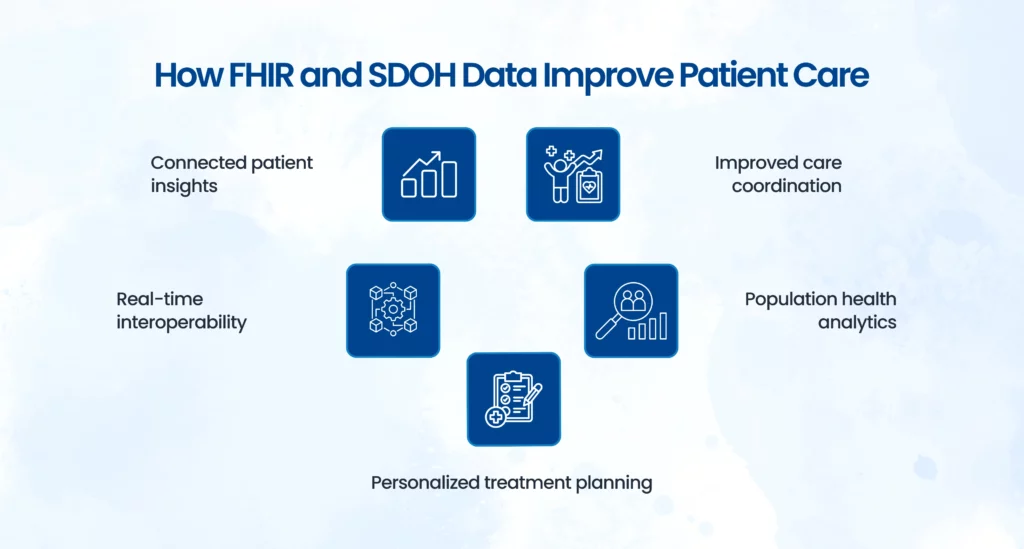
How FHIR and SDOH Data Improve Patient Care
1. Creates a More Complete Patient View
FHIR enables healthcare organizations to integrate clinical and social data into unified patient records.
Providers gain visibility into:
- Medical histories
- Behavioral health conditions
- Medication adherence
- Housing challenges
- Transportation barriers
- Food insecurity
- Community support access
A more complete patient profile helps care teams make informed and personalized treatment decisions.
2. Improves Care Coordination Across Healthcare Ecosystems
Patient care often involves multiple providers, specialists, payers, and community organizations.
FHIR improves communication between:
- Primary care providers
- Behavioral health specialists
- Care coordinators
- Community support organizations
- Hospitals and emergency departments
- Case management teams
Connected interoperability reduces fragmented care experiences and improves continuity of care.
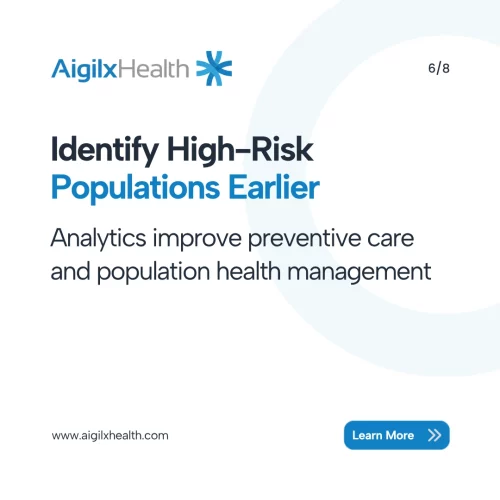
3. Enables Early Identification of High-Risk Patients
FHIR-powered analytics help organizations identify patients who may require proactive intervention.
Healthcare teams can:
- Detect social risk factors earlier
- Monitor vulnerable populations
- Identify care gaps
- Improve preventive outreach
- Predict readmission risks
- Monitor chronic disease progression
Early intervention strategies help improve outcomes while reducing unnecessary healthcare utilization.
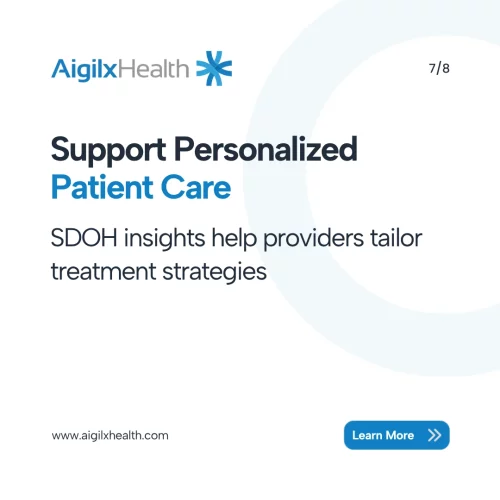
4. Supports Personalized Treatment Planning
Every patient experiences unique social and environmental challenges.
FHIR-integrated SDOH data enables providers to tailor care plans based on individual patient circumstances.
Examples include:
- Coordinating transportation assistance
- Connecting patients with food programs
- Supporting housing referrals
- Adjusting care plans based on financial limitations
- Improving medication accessibility
Personalized care improves treatment adherence and patient engagement.
5. Strengthens Population Health Management
Population health management depends on connected and actionable data insights.
FHIR supports advanced analytics capabilities that help organizations monitor:
- Population risk trends
- Social vulnerability indicators
- Treatment outcomes
- Care access disparities
- Preventive care engagement
- Readmission patterns
Healthcare leaders can use these insights to improve operational and clinical strategies across patient populations.
The Role of Analytics in FHIR-Based SDOH Strategies
FHIR-powered analytics enable healthcare organizations to move from reactive care delivery to proactive population health management.
Organizations can analyze:
- Social risk patterns
- Care utilization trends
- Community health disparities
- Outcome measurement
- Preventive intervention performance
- Referral completion rates
Real-time analytics help organizations make data-driven decisions that improve both patient outcomes and operational performance.
How FHIR Supports Value-Based Care Through SDOH Integration
In 2026, healthcare reimbursement models increasingly focus on measurable outcomes rather than service volume.
FHIR supports value-based care initiatives through:
- Standardized quality reporting
- Outcome measurement
- Coordinated care delivery
- Population health analytics
- Improved patient engagement
- Risk adjustment support
- Enhanced reporting accuracy
Organizations that integrate SDOH insights into care delivery are better positioned to improve quality performance and long-term patient outcomes.
Common Gaps in SDOH Data Management
1. Fragmented Data Systems
Disconnected technologies limit visibility into patient social needs.
2. Limited Care Coordination
Providers often lack shared access to social and clinical data.
3. Inconsistent Documentation
Manual workflows create incomplete or inaccurate records.
4. Poor Population Health Visibility
Organizations struggle to identify trends across patient populations.
5. Delayed Interventions
Without real-time insights, proactive care becomes difficult.
FHIR helps healthcare organizations address these challenges through scalable interoperability frameworks.
Key Benefits of FHIR-Powered SDOH Integration
Improved Patient Outcomes
Connected care improves treatment continuity and preventive intervention strategies.
Better Patient Engagement
Personalized care experiences strengthen trust and communication.
Enhanced Population Health Visibility
Organizations gain actionable insights across patient populations.
Reduced Administrative Burden
FHIR automates data exchange and reduces manual workflows.
Stronger Operational Efficiency
Healthcare teams can coordinate care more effectively across systems.
Scalable Digital Transformation
Modern interoperability frameworks support long-term healthcare innovation.
How Aigilx Health Supports SDOH and FHIR Integration
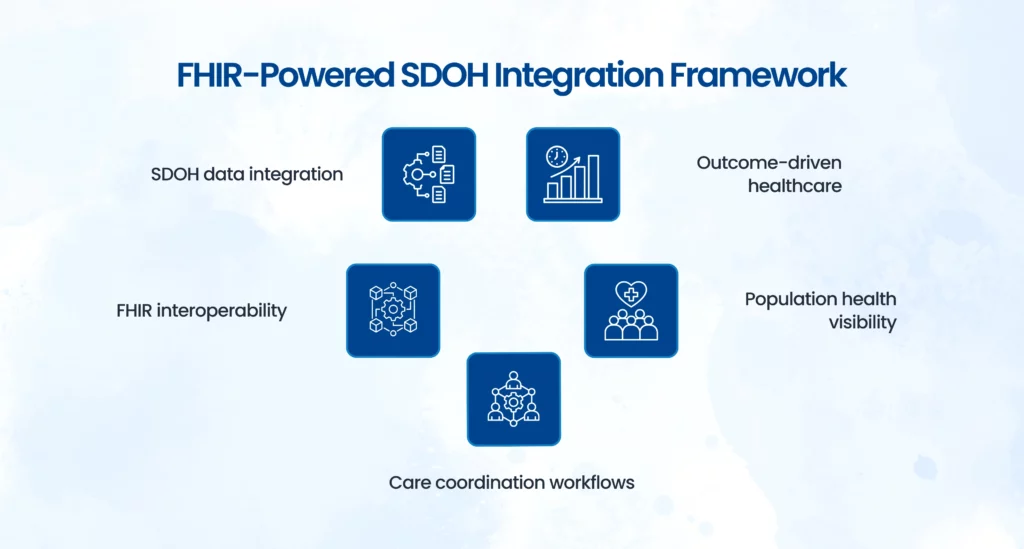
Aigilx Health helps healthcare organizations modernize interoperability and population health strategies through:
- FHIR-first interoperability frameworks
- SDOH data integration
- Population health analytics
- API modernization
- Workflow automation
- Care coordination optimization
- Data governance support
- Real-time healthcare interoperability solutions
By building connected healthcare ecosystems, Aigilx Health helps organizations improve patient care, operational efficiency, and long-term healthcare outcomes.
Why FHIR-Based SDOH Integration Is Essential in 2026
Healthcare is rapidly shifting toward personalized, connected, and outcome-driven care delivery.
Organizations that invest in FHIR-enabled SDOH integration gain advantages in:
- Care coordination
- Preventive healthcare
- Population health performance
- Patient engagement
- Value-based reimbursement
- Clinical efficiency
- Healthcare innovation scalability
FHIR is no longer simply an interoperability standard. It is becoming the foundation for modern patient-centered healthcare transformation.
How Can Healthcare Organizations Move Forward?
Successful SDOH integration begins with a clear interoperability strategy.
Healthcare organizations should focus on:
- Assessing interoperability gaps
- Standardizing SDOH documentation
- Implementing FHIR-based APIs
- Strengthening analytics capabilities
- Improving care coordination workflows
- Integrating community resource networks
- Building scalable interoperability frameworks
With the right interoperability strategy and technology partner, healthcare organizations can create connected ecosystems that improve patient outcomes and support long-term population health transformation.
FAQs
SDOH are non-medical factors such as housing, food access, transportation, employment, and social support that influence patient health outcomes.
FHIR is a healthcare interoperability standard that enables secure and real-time data exchange between healthcare systems and applications.
FHIR improves access to connected patient data, supports care coordination, enhances analytics, and enables personalized treatment planning.
SDOH data helps providers understand the social factors affecting patient health and supports more effective and preventive care delivery.
FHIR enables real-time interoperability and analytics that help organizations monitor risks, improve outcomes, and manage patient populations more effectively.
Aigilx Health provides FHIR integration, SDOH interoperability solutions, analytics support, workflow automation, and population health modernization strategies.
Categories
- 1115 Waiver (8)
- ACO (7)
- AI (48)
- Aigilx Health (48)
- CCBHC (8)
- Control Center (10)
- FHIR Facade (7)
- FHIR Server (14)
- HIE (5)
- Payers (8)
- Providers (11)
- Rapid Fire (9)

ISO 27001:2022 Certified
Aigilx health specializes in developing Interoperability solutions to create a healthcare ecosystem and aids in the delivery of efficient, patient-centric and population-focused healthcare.