Inside the $50B Rural Health Transformation Program: What It Funds & Who Qualifies
05 Jun
Inside the $50B Rural Health Transformation Program: What It Funds & Who Qualifies
Rural healthcare organizations across the United States are entering a major transformation phase in 2026. Financial pressures, workforce shortages, aging infrastructure, and fragmented healthcare systems have created growing operational challenges for rural hospitals and care networks.
To address these issues, the Rural Health Transformation Program (RHTP) has emerged as one of the most significant healthcare modernization initiatives in recent years. With nearly $50 billion allocated toward rural healthcare improvement, the program is designed to strengthen care delivery, improve healthcare access, modernize infrastructure, and support long-term sustainability for underserved communities.
For rural hospitals, health systems, consultants, and healthcare technology providers, understanding how the program works is becoming increasingly important.
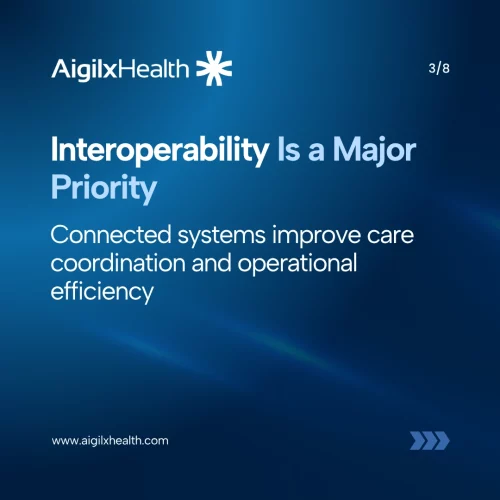
At the center of many modernization conversations is healthcare interoperability.
As funding deadlines approach and technology priorities evolve, rural healthcare organizations are increasingly evaluating scalable modernization strategies that improve care coordination without requiring costly full-system replacements.
What Is the Rural Health Transformation Program (RHTP)?
The Rural Health Transformation Program is a large-scale healthcare funding initiative designed to improve healthcare access, operational sustainability, and technology modernization across rural healthcare systems.
The program focuses on helping rural hospitals and healthcare organizations:
- Improve operational efficiency
- Expand care access
- Modernize healthcare infrastructure
- Strengthen care coordination
- Improve healthcare outcomes
- Enhance digital health capabilities
- Support long-term financial sustainability
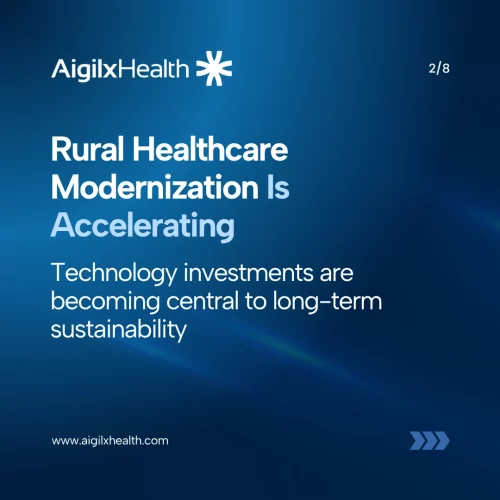
In 2026, healthcare technology modernization has become one of the program’s most important strategic pillars.
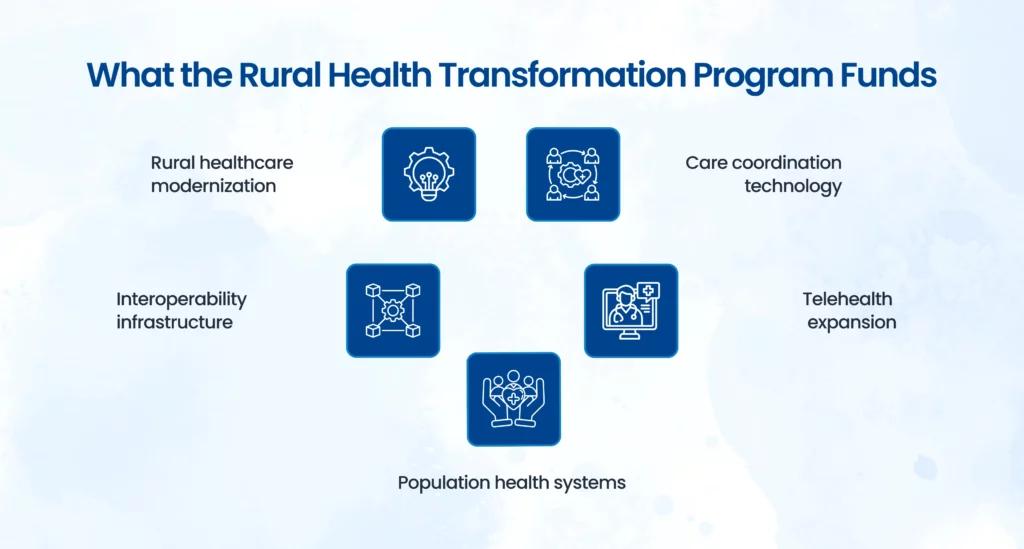
This includes investments in:
- Healthcare interoperability
- Data exchange infrastructure
- Population health systems
- Telehealth enablement
- Workflow automation
- Care coordination platforms
- Analytics modernization
- Cybersecurity improvements
For many rural organizations, RHTP funding represents a rare opportunity to modernize aging healthcare technology ecosystems.
Why Rural Healthcare Organizations Need Technology Modernization
Many rural healthcare providers continue to operate with fragmented legacy systems that limit scalability, interoperability, and operational visibility.
Common challenges include:
- Aging EHR platforms
- Manual referral workflows
- Limited interoperability capabilities
- Staffing shortages
- Delayed patient data exchange
- Poor analytics visibility
- Disconnected care coordination
- Limited patient engagement infrastructure
These issues create operational inefficiencies while also affecting patient outcomes and reimbursement performance.
As value-based care adoption increases, rural hospitals are under growing pressure to improve measurable healthcare outcomes while controlling costs.
Modern interoperability infrastructure is becoming essential for achieving these goals.
Who Qualifies for RHTP Funding?
Eligibility requirements vary by state implementation structure and funding distribution models, but the program primarily targets rural healthcare organizations and underserved communities.
Organizations commonly included in eligibility discussions include:
- Rural hospitals
- Critical access hospitals
- Rural health clinics
- Community health organizations
- Regional healthcare networks
- Public health partnerships
- State-level healthcare collaboratives
Qualification criteria may involve:
- Geographic rural designation
- Financial sustainability metrics
- Community health impact
- Population health priorities
- Technology modernization needs
- Operational risk factors
- Medicaid and Medicare participation
Because many funding decisions occur at the state level, hospitals often need to align their modernization strategies with broader regional healthcare priorities.
Understanding the RHTP Funding Structure
One of the defining characteristics of the Rural Health Transformation Program is its state-driven funding distribution model.
Rather than distributing funding directly to every organization individually, many program structures involve:
- State healthcare agencies
- Medicaid transformation programs
- Regional healthcare collaboratives
- Public-private partnerships
- Rural health infrastructure initiatives
This creates a competitive environment where organizations must demonstrate both operational need and strategic modernization readiness.
Healthcare leaders are increasingly prioritizing projects that can show:
- Scalable implementation
- Faster deployment timelines
- Measurable operational improvement
- Reduced infrastructure disruption
- Improved interoperability outcomes
- Long-term sustainability
Technology modernization proposals that align closely with interoperability and care coordination objectives are receiving growing attention.
The Growing Importance of the RHTP Technology Pillar
The technology modernization pillar has become one of the most closely watched aspects of RHTP funding discussions.
Healthcare organizations are focusing investments on areas such as:
Interoperability Modernization
Connected healthcare ecosystems improve care coordination, patient visibility, and data accessibility across providers.
Population Health Infrastructure
Rural hospitals are expanding analytics capabilities to better manage chronic conditions, preventive care, and community health outcomes.
Care Coordination Systems
Connected workflows help reduce fragmented care delivery across rural healthcare networks.
Telehealth Enablement
Virtual care infrastructure continues to play a major role in improving healthcare accessibility in underserved regions.
Cybersecurity and Compliance
Healthcare organizations are strengthening security frameworks to protect sensitive patient data while meeting evolving compliance requirements.
Why Interoperability Vendors Are Strongly Positioned
As RHTP technology priorities evolve, interoperability vendors are becoming increasingly important partners in rural healthcare transformation.
Healthcare organizations are seeking solutions that:
- Integrate with existing systems
- Reduce implementation complexity
- Improve data accessibility
- Enable real-time interoperability
- Support analytics modernization
- Improve care coordination
- Accelerate deployment timelines
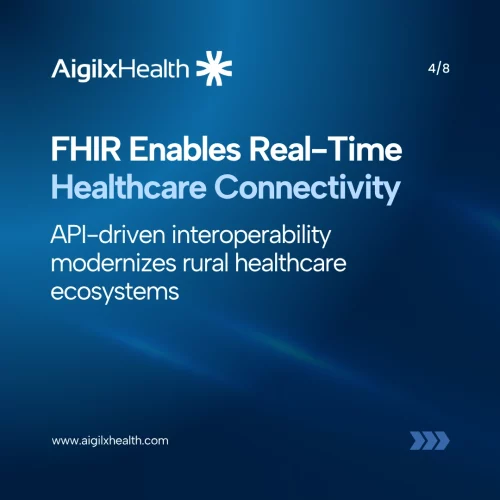
FHIR-based interoperability strategies are especially gaining traction because they allow organizations to modernize healthcare connectivity without requiring complete infrastructure replacement.
This creates opportunities for rural hospitals to improve operational performance while maintaining existing clinical systems.
Why Overlay Modernization Models Are Gaining Momentum
Traditional healthcare modernization projects often involve large-scale infrastructure replacement efforts that require extensive timelines, staffing, and capital investment.
For many rural healthcare organizations, these models are difficult to sustain.
Overlay modernization strategies provide an alternative path.
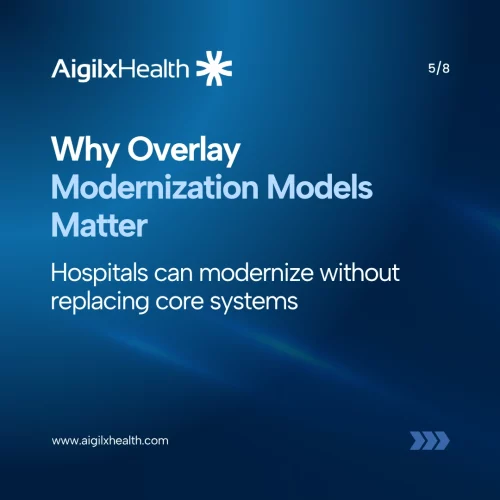
Instead of replacing core systems entirely, interoperability overlays sit above existing infrastructure and improve connectivity through modern APIs, workflow orchestration, and data exchange frameworks.
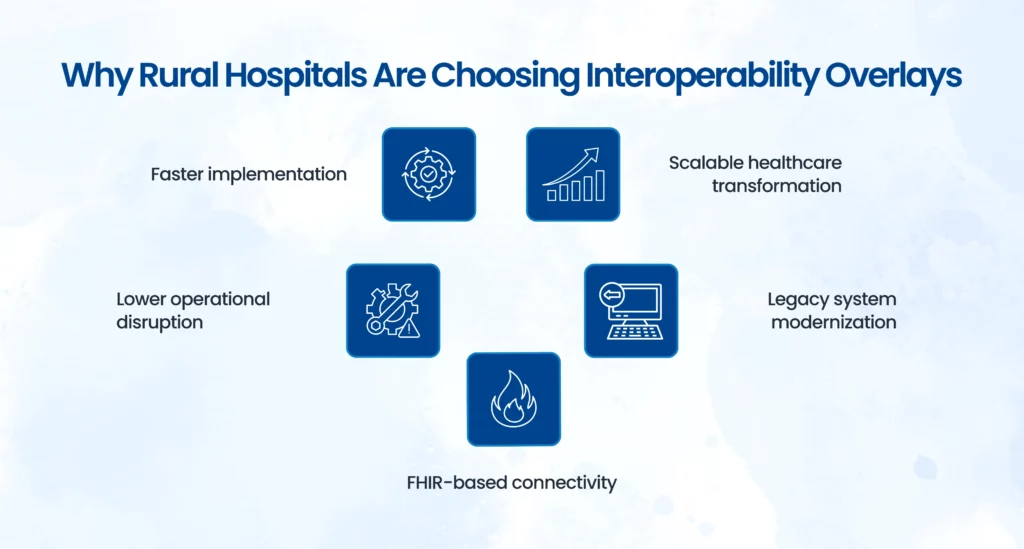
Benefits of overlay modernization models include:
- Faster implementation
- Lower operational disruption
- Reduced infrastructure costs
- Improved scalability
- Better interoperability
- Enhanced analytics visibility
- Easier integration across systems
This approach aligns well with the operational realities facing many rural healthcare providers in 2026.
The Urgency Around October 2026 Funding Obligations
Timing is becoming a major concern for healthcare organizations pursuing rural modernization initiatives.
As funding obligation deadlines approach in October 2026, many organizations are accelerating planning efforts to ensure projects can move forward within required implementation windows.
Healthcare leaders are prioritizing initiatives that can demonstrate:
- Faster deployment readiness
- Clear interoperability outcomes
- Scalable implementation models
- Measurable operational improvement
- Lower infrastructure risk
Because large-scale infrastructure replacement projects often require lengthy deployment cycles, interoperability overlay strategies are becoming increasingly attractive.
Organizations that delay modernization planning may face challenges securing implementation readiness before obligation deadlines arrive.
Common Technology Priorities for Rural Hospitals in 2026
1. FHIR-Based Interoperability
Healthcare organizations are modernizing data exchange using API-first interoperability strategies.
2. Population Health Analytics
Rural providers are improving visibility into patient populations and healthcare outcomes.
3. Workflow Automation
Automation helps reduce administrative burden and staffing strain.
4. Care Coordination Platforms
Connected systems improve collaboration across healthcare networks.
5. Telehealth Infrastructure
Virtual care continues expanding healthcare access in underserved regions.
6. Data Governance and Compliance
Organizations are strengthening data security, interoperability governance, and reporting capabilities.
How Interoperability Supports Rural Healthcare Sustainability
Technology modernization is no longer viewed solely as an IT initiative.
For rural healthcare organizations, interoperability directly impacts:
- Financial sustainability
- Operational efficiency
- Patient outcomes
- Reimbursement performance
- Care coordination
- Workforce productivity
- Community healthcare access
Connected healthcare ecosystems enable rural providers to operate more efficiently while supporting better long-term care delivery models.
How Aigilx Health Supports Rural Healthcare Modernization
Aigilx Health helps rural healthcare organizations modernize interoperability infrastructure through:
- FHIR-first integration strategies
- API modernization
- Interoperability overlays
- Workflow automation
- Population health analytics
- Care coordination optimization
- Legacy system modernization
- Scalable healthcare integration frameworks
By helping organizations modernize incrementally, Aigilx Health supports sustainable rural healthcare transformation without requiring full infrastructure replacement.
Why Rural Healthcare Modernization Will Accelerate Beyond 2026
The Rural Health Transformation Program is likely to influence healthcare modernization strategies far beyond immediate funding cycles.
Healthcare organizations are recognizing that connected interoperability infrastructure is essential for:
- Long-term sustainability
- Outcome-driven care
- Population health management
- Financial resilience
- Operational scalability
- Rural healthcare accessibility
As reimbursement models continue shifting toward value-based care, rural hospitals that invest in interoperability modernization today may be better positioned for future healthcare transformation initiatives.
How Should Rural Healthcare Organizations Prepare?
Healthcare leaders should begin by evaluating current operational and interoperability gaps.
Key focus areas include:
- Assessing legacy infrastructure limitations
- Identifying interoperability priorities
- Evaluating overlay modernization opportunities
- Improving analytics capabilities
- Strengthening care coordination workflows
- Building scalable implementation roadmaps
- Aligning modernization plans with state funding priorities
Organizations that move early may improve both funding readiness and long-term operational resilience.
FAQs
The Rural Health Transformation Program is a large-scale initiative designed to improve rural healthcare infrastructure, operational sustainability, and technology modernization.
Eligibility generally includes rural hospitals, critical access hospitals, rural clinics, and healthcare organizations serving underserved rural communities.
The program commonly supports interoperability modernization, analytics, telehealth infrastructure, workflow automation, cybersecurity, and care coordination systems.
Overlay models allow healthcare organizations to modernize existing systems without full EHR replacement, reducing costs and operational disruption.
FHIR enables secure, standardized, real-time healthcare data exchange across systems and providers.
Funding obligation timelines are creating urgency around modernization planning and implementation readiness.
Categories
- 1115 Waiver (8)
- ACO (7)
- AI (48)
- Aigilx Health (48)
- CCBHC (8)
- Control Center (10)
- FHIR Facade (7)
- FHIR Server (14)
- HIE (5)
- Payers (8)
- Providers (11)
- Rapid Fire (9)

ISO 27001:2022 Certified
Aigilx health specializes in developing Interoperability solutions to create a healthcare ecosystem and aids in the delivery of efficient, patient-centric and population-focused healthcare.