How FHIR Improves Population Health in Behavioral Healthcare?
22 May
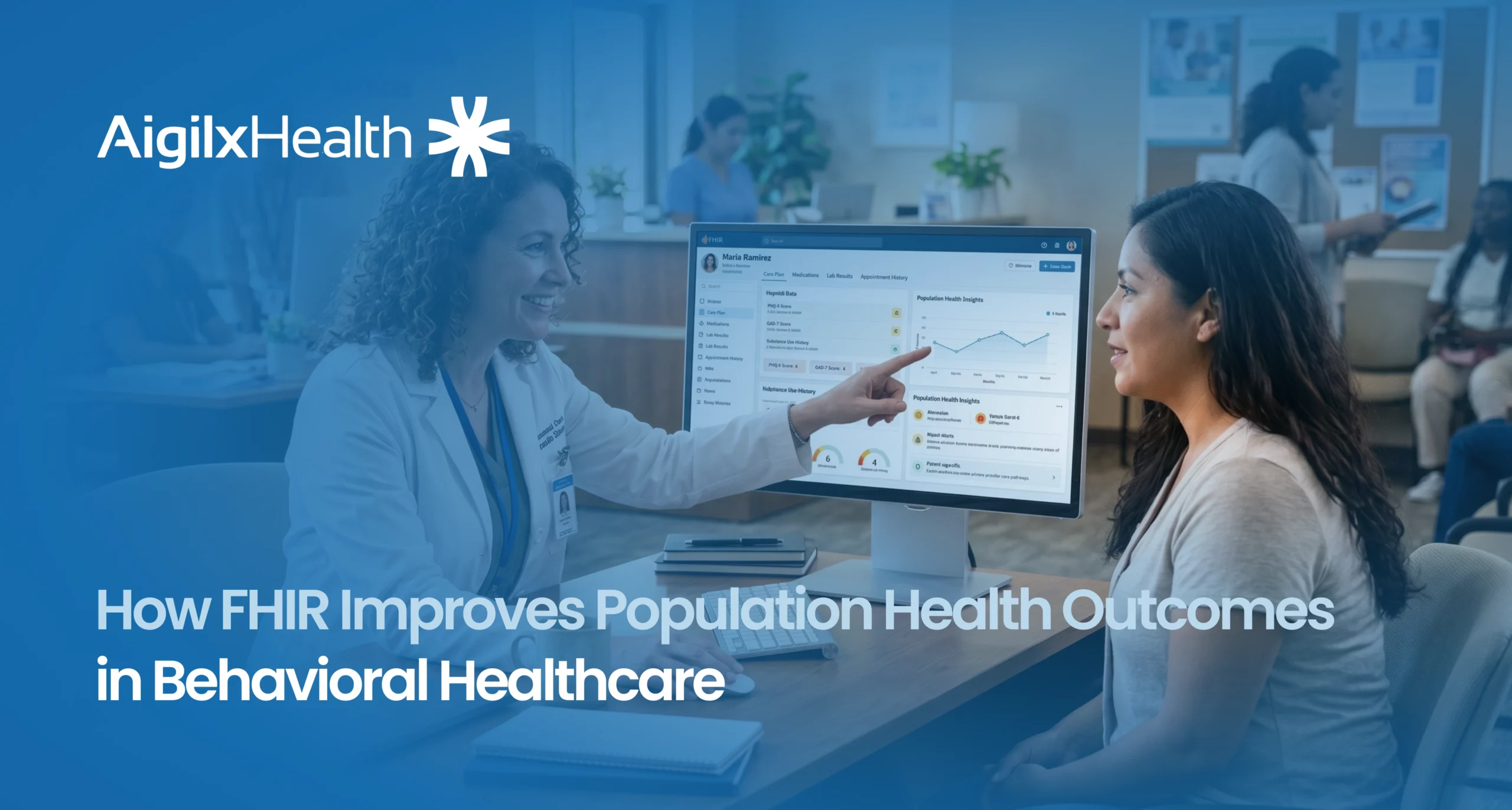
How FHIR Improves Population Health Outcomes in Behavioral Healthcare
Behavioral healthcare organizations are under growing pressure to improve patient outcomes while managing rising costs, fragmented care delivery, and increasing demand for mental health services. In 2026, population health management has become a strategic priority for behavioral health providers seeking to deliver proactive, coordinated, and data-driven care.
However, many behavioral health systems still struggle with disconnected technologies, siloed patient records, delayed data exchange, and limited visibility into patient populations. These interoperability gaps make it difficult to identify high-risk patients, coordinate care across providers, and measure long-term treatment outcomes effectively.
This is where FHIR (Fast Healthcare Interoperability Resources) is transforming behavioral healthcare.
FHIR enables real-time, standardized healthcare data exchange across systems, providers, and applications. By creating connected healthcare ecosystems, behavioral health organizations can improve population health analytics, strengthen care coordination, support value-based care initiatives, and deliver more personalized patient experiences.
As healthcare interoperability continues to evolve, FHIR is becoming the foundation for scalable population health strategies in behavioral healthcare.
What Is FHIR in Behavioral Healthcare?
FHIR (Fast Healthcare Interoperability Resources) is a modern interoperability standard developed to simplify healthcare data exchange between systems and applications.
Unlike legacy healthcare integrations that rely heavily on manual workflows and fragmented interfaces, FHIR uses API-driven architecture to enable secure, real-time access to patient data.
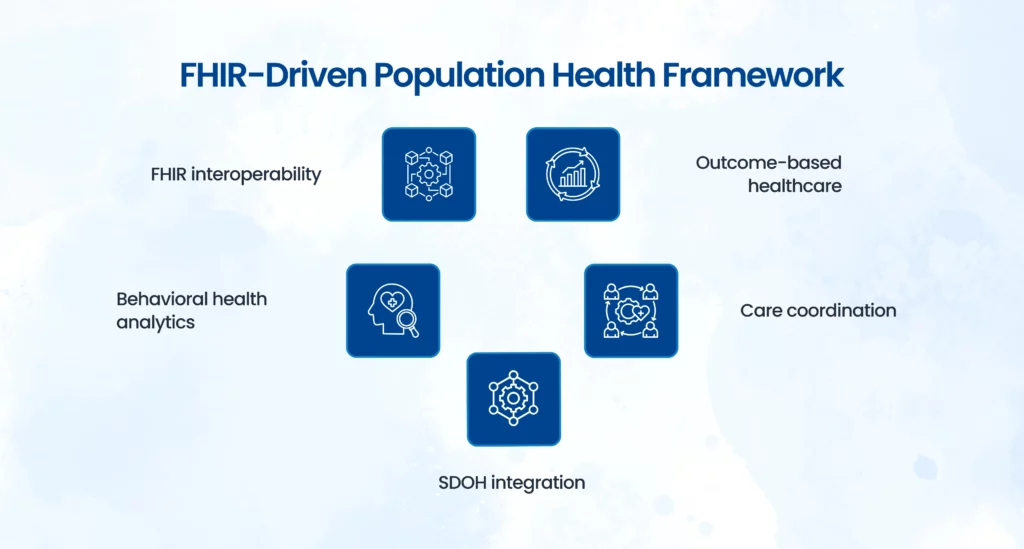
In behavioral healthcare, FHIR supports:
- Real-time patient record access
- Care coordination across providers
- Standardized clinical data exchange
- Population health analytics
- Integrated treatment planning
- Social determinants of health (SDOH) integration
- Scalable interoperability initiatives
FHIR allows behavioral healthcare organizations to move beyond isolated systems and toward connected, patient-centered care models.x
In 2026, interoperability is no longer optional. It is foundational for:
- Value-based care
- Population health management
- Care coordination
- Risk adjustment
- Patient engagement
- Regulatory compliance
Why Population Health Matters in Behavioral Healthcare
Population health management focuses on improving outcomes across entire patient groups rather than treating isolated episodes of care.
For behavioral health organizations, this includes:
- Identifying high-risk patient populations
- Monitoring chronic mental health conditions
- Reducing hospital readmissions
- Improving care continuity
- Supporting preventive interventions
- Addressing social determinants affecting mental health
- Measuring treatment effectiveness at scale
Without connected data systems, achieving these goals becomes extremely difficult.
Behavioral healthcare providers often work across multiple organizations, specialists, community programs, primary care networks, and crisis intervention services. Fragmented systems create gaps that negatively impact both operational performance and patient outcomes.
FHIR helps close these gaps through interoperable, real-time data exchange.
Why Behavioral Healthcare Faces Unique Interoperability Challenges
Behavioral healthcare organizations often operate within highly fragmented environments.
Common interoperability barriers include:
- Legacy EHR systems
- Limited API capabilities
- Manual referral processes
- Disconnected care coordination
- Inconsistent patient records
- Limited analytics visibility
- Siloed social determinants data
- Resource and staffing limitations
These challenges make it difficult to build effective population health strategies.
FHIR addresses these issues by enabling standardized and scalable interoperability across healthcare ecosystems.
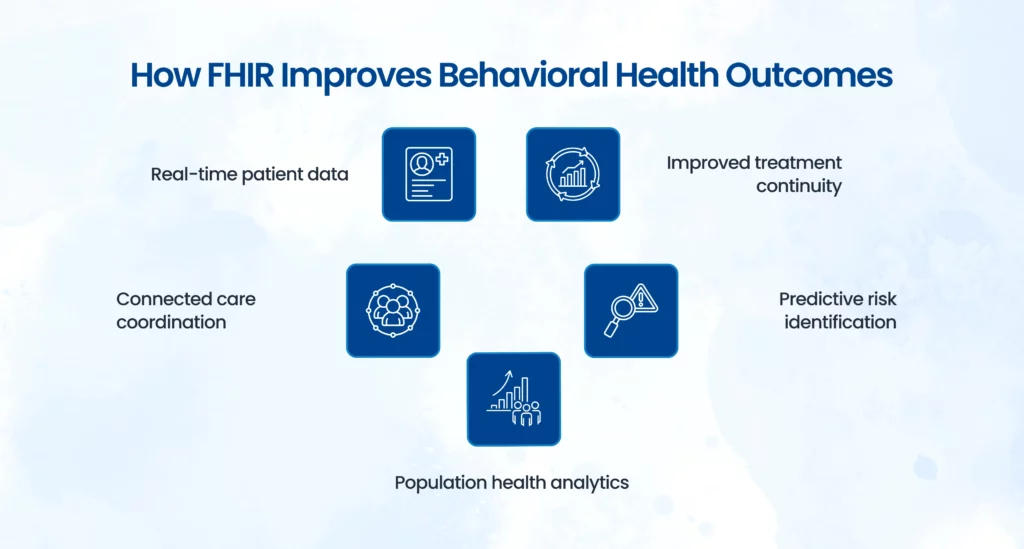
How FHIR Improves Population Health Outcomes
1. Real-Time Access to Comprehensive Patient Data
FHIR enables providers to access complete patient information across systems in real time.
This improves visibility into:
- Behavioral health histories
- Medication records
- Crisis interventions
- Care plans
- Social determinants of health
- Primary care interactions
- Emergency department visits
Comprehensive patient data supports more informed clinical decision-making and improves continuity of care.
2. Improved Care Coordination Across Providers
Behavioral healthcare often involves multiple care teams.
FHIR improves communication between:
- Behavioral health specialists
- Primary care providers
- Care coordinators
- Community organizations
- Emergency departments
- Case management teams
Connected data exchange reduces duplication, delays, and fragmented treatment experiences.
3. Better Identification of High-Risk Populations
Population health strategies depend on identifying patients who may require proactive intervention.
FHIR-enabled analytics help organizations:
- Detect care gaps
- Monitor treatment adherence
- Identify high-risk behavioral patterns
- Predict crisis events
- Track chronic mental health conditions
- Improve preventive outreach
This allows providers to intervene earlier and improve long-term outcomes.
The Role of FHIR Analytics in Behavioral Health
FHIR supports advanced analytics capabilities that improve operational and clinical performance.
Behavioral health organizations can use FHIR-based analytics to monitor:
- Patient engagement trends
- Readmission risks
- Referral completion rates
- Medication adherence
- Population risk stratification
- Social determinants impact
- Care transition effectiveness
Real-time analytics provide healthcare leaders with actionable insights that support data-driven decision-making.
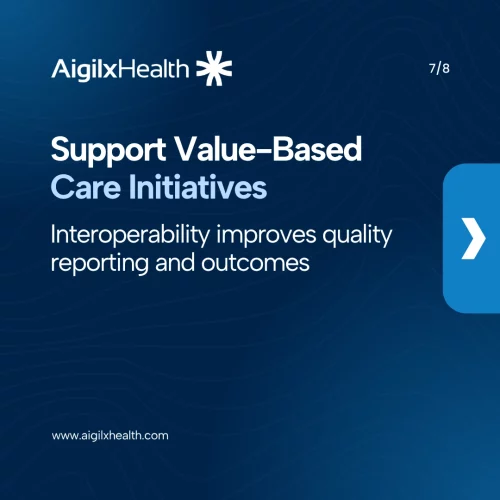
How FHIR Supports Value-Based Behavioral Healthcare
In 2026, behavioral healthcare reimbursement models increasingly focus on outcomes rather than service volume.
FHIR supports value-based care initiatives through:
- Standardized quality reporting
- Outcome measurement
- Risk adjustment support
- Coordinated care delivery
- Improved patient engagement
- Enhanced reporting accuracy
Interoperability enables organizations to track measurable improvements across patient populations more effectively.
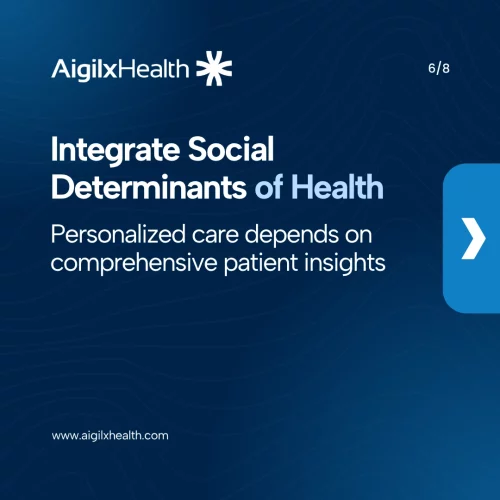
The Importance of Social Determinants of Health (SDOH)
Behavioral health outcomes are heavily influenced by social and environmental factors.
FHIR enables integration of SDOH data related to:
- Housing instability
- Employment status
- Food insecurity
- Transportation barriers
- Community support access
- Financial stress
Integrating SDOH insights into care planning helps organizations deliver more personalized and effective treatment strategies.
Common Population Health Gaps in Behavioral Healthcare
1. Fragmented Patient Records
Disconnected systems reduce visibility into complete patient journeys.
2. Limited Care Coordination
Providers often lack access to shared patient information.
3. Delayed Data Exchange
Manual processes slow clinical decision-making.
4. Poor Analytics Visibility
Organizations struggle to measure population-level outcomes.
5. Inconsistent Treatment Planning
Lack of standardized data creates care variability.
FHIR helps behavioral healthcare organizations address these challenges through connected interoperability frameworks.
Key Benefits of FHIR for Behavioral Health Organizations
Improved Patient Outcomes
Connected care improves treatment continuity and intervention timing.
Reduced Administrative Burden
Automation replaces manual workflows and fragmented integrations.
Better Population Health Visibility
Organizations gain actionable insights across patient populations.
Enhanced Operational Efficiency
FHIR reduces inefficiencies associated with legacy systems.
Scalable Digital Transformation
Modern interoperability supports long-term healthcare innovation.
How Aigilx Health Supports Behavioral Health Interoperability
Aigilx Health helps behavioral healthcare organizations modernize interoperability through:
- FHIR-first integration strategies
- Population health analytics
- API modernization
- Care coordination optimization
- Workflow automation
- Data governance support
- Real-time interoperability frameworks
By helping organizations build connected healthcare ecosystems, Aigilx Health enables scalable population health transformation.
1. Stronger Cross-Organization Collaboration
Providers can exchange information more efficiently across:
- Hospitals
- Specialists
- Primary care networks
- Behavioral health organizations
- Post-acute facilities
This creates more coordinated patient journeys.
Why FHIR Is Becoming Essential in 2026
Behavioral healthcare is rapidly moving toward connected, outcome-driven care delivery.
Organizations that invest in interoperability today gain advantages in:
- Care coordination
- Patient engagement
- Value-based reimbursement
- Clinical efficiency
- Population health performance
- Operational scalability
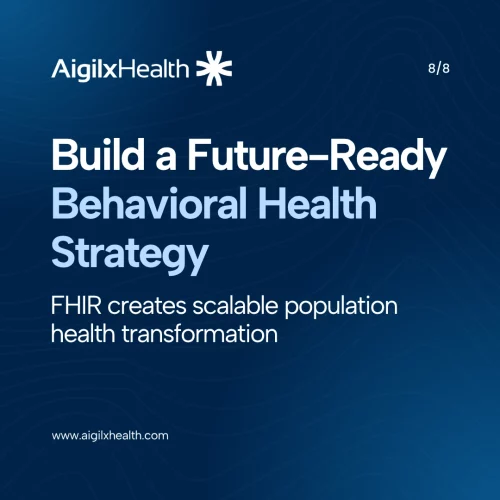
FHIR is no longer simply a technical standard. It is becoming the foundation for modern behavioral healthcare transformation.
How Can Behavioral Healthcare Organizations Move Forward?
Successful population health transformation begins with a clear interoperability strategy.
Behavioral healthcare organizations should focus on:
- Assessing current interoperability gaps
- Modernizing legacy integrations
- Implementing FHIR-based APIs
- Strengthening analytics capabilities
- Integrating SDOH data
- Improving care coordination workflows
- Building scalable interoperability frameworks
With the right technology strategy and interoperability partner, behavioral healthcare providers can create connected ecosystems that improve both patient outcomes and operational performance.
FAQs
FHIR is a healthcare interoperability standard that enables secure, real-time data exchange across healthcare systems and applications.
FHIR improves access to connected patient data, supports analytics, enhances care coordination, and enables proactive intervention strategies.
Interoperability reduces fragmented care, improves communication between providers, and supports better patient outcomes.
Analytics help organizations identify risks, monitor outcomes, improve preventive care, and optimize operational performance.
FHIR enables standardized reporting, coordinated care delivery, and outcome measurement needed for value-based reimbursement models.
Aigilx Health provides FHIR integration, interoperability modernization, analytics support, workflow automation, and population health solutions.
Categories
- 1115 Waiver (8)
- ACO (7)
- AI (42)
- Aigilx Health (42)
- CCBHC (8)
- Control Center (10)
- FHIR Facade (7)
- FHIR Server (14)
- HIE (5)
- Payers (8)
- Providers (11)
- Rapid Fire (9)

ISO 27001:2022 Certified
Aigilx health specializes in developing Interoperability solutions to create a healthcare ecosystem and aids in the delivery of efficient, patient-centric and population-focused healthcare.