TEFCA for Non-IDN Hospitals: A Step-by-Step Readiness Checklist
13 May
Healthcare interoperability is entering a new phase in 2026. As the Trusted Exchange Framework and Common Agreement (TEFCA) expands nationwide, healthcare organizations are being pushed toward more connected, secure, and standardized data exchange.
For large integrated delivery networks (IDNs), interoperability initiatives are often supported by enterprise-scale IT infrastructure and dedicated digital transformation teams. But for non-IDN hospitals including community hospitals, rural facilities, independent systems, and regional providers the path to TEFCA readiness is far more complex.
Many non-IDN hospitals still operate within fragmented ecosystems involving disconnected EHRs, legacy interfaces, manual workflows, and limited interoperability budgets. Yet participation in nationwide exchange frameworks is rapidly becoming essential for:
- Care coordination
- Value-based reimbursement
- Referral management
- Regulatory compliance
- Patient engagement
- Revenue integrity
The challenge is no longer whether non-IDN hospitals should prepare for TEFCA. The question is how they can do it efficiently, strategically, and without overwhelming operational disruption.
This article provides a step-by-step TEFCA readiness checklist specifically designed for non-IDN hospitals preparing for 2026 interoperability requirements.
What Is TEFCA and Why Does It Matter?
TEFCA (Trusted Exchange Framework and Common Agreement) is a nationwide interoperability initiative designed to standardize healthcare data exchange across organizations, networks, and technology platforms.
Its primary goals include:
- Enabling secure nationwide health information exchange
- Reducing fragmentation across healthcare systems
- Supporting real-time access to patient data
- Improving care coordination and patient outcomes
- Simplifying interoperability governance
TEFCA establishes a common framework through Qualified Health Information Networks (QHINs), allowing healthcare organizations to exchange data more consistently and securely.
For non-IDN hospitals, TEFCA represents both an operational challenge and a strategic opportunity.
Why Are Non-IDN Hospitals Facing Unique Challenges?
Unlike large health systems, non-IDN hospitals often lack centralized interoperability infrastructure.
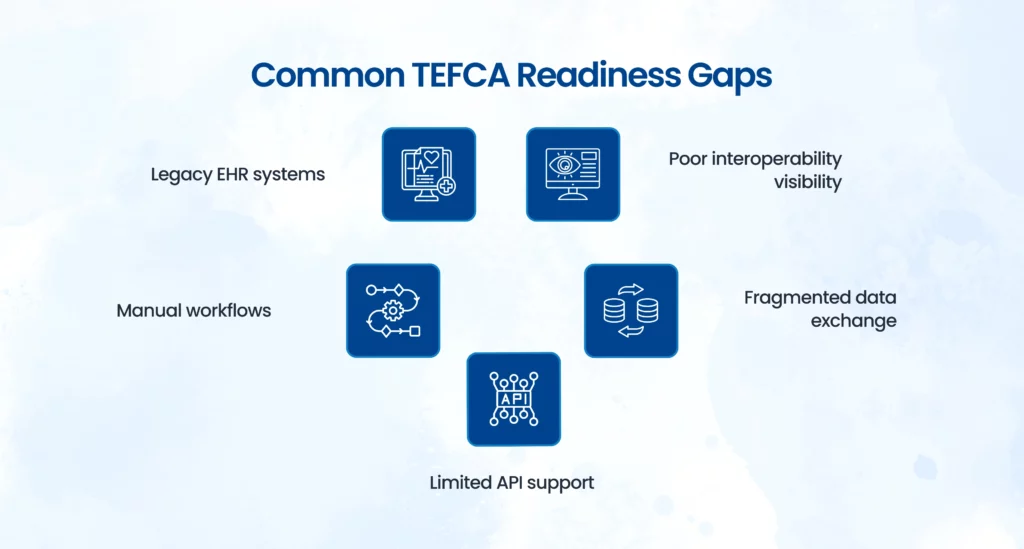
Common barriers include:
- Limited IT resources
- Aging EHR systems
- Point-to-point integrations
- Budget constraints
- Inconsistent data governance
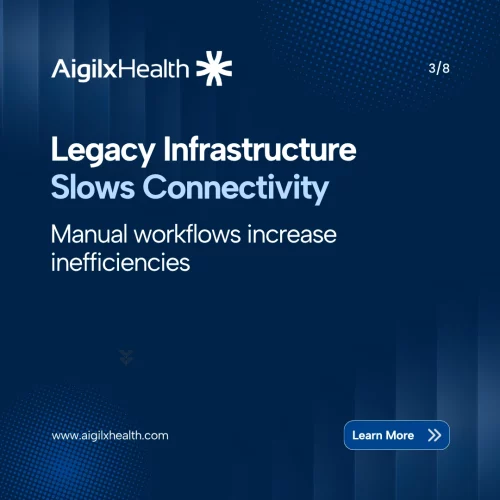
- Manual exchange workflows
- Limited internal interoperability expertise
Without a clear readiness strategy, TEFCA adoption can quickly become overwhelming.
Why TEFCA Readiness Matters in 2026
In 2026, interoperability is directly tied to:
- Value-based care performance
- Referral retention
- Revenue cycle efficiency
- Clinical collaboration
- Patient satisfaction
- Regulatory compliance
Hospitals unable to exchange data efficiently risk:
- Increased administrative costs
- Delayed care coordination
- Higher referral leakage
- Poorer patient experiences
- Lower reimbursement performance
TEFCA readiness is no longer just an IT initiative it is a business and clinical imperative.
Step-by-Step TEFCA Readiness Checklist for Non-IDN Hospitals
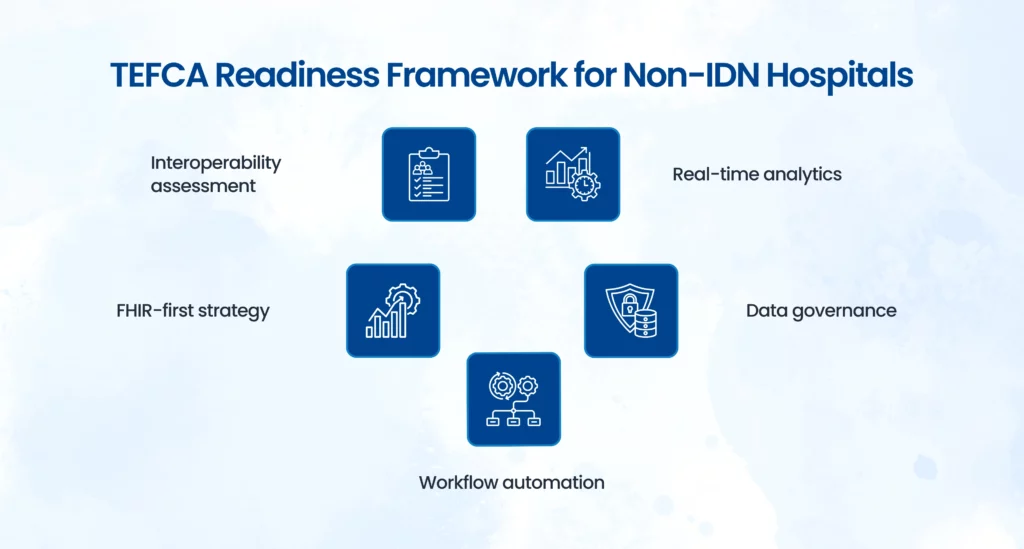
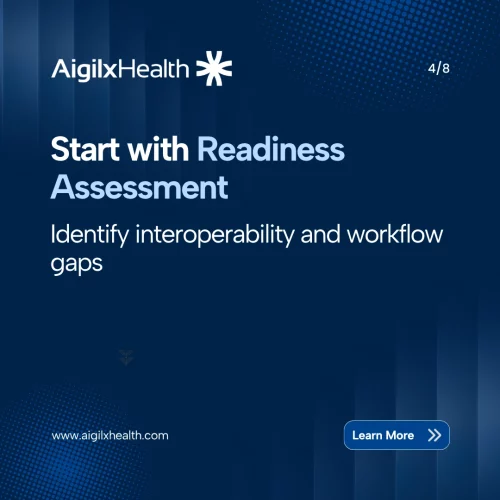
Step 1. Assess Your Current Interoperability Environment
Before implementing new interoperability strategies, hospitals must evaluate their current state.
Key assessment areas include:
- Existing EHR capabilities
- Current interfaces and integrations
- Data exchange methods
- API readiness
- Referral workflows
- Clinical data accessibility
- Security infrastructure
Hospitals should identify:
- Where interoperability gaps exist
- Which workflows remain manual
- Which systems cannot support modern exchange standards
A baseline assessment creates the foundation for TEFCA planning.
Step 2. Evaluate EHR and Vendor Readiness
Not all EHR systems are equally prepared for TEFCA participation.
Hospitals should work closely with vendors to determine:
- FHIR support capabilities
- API maturity
- TEFCA alignment roadmap
- QHIN participation plans
- Data export and exchange capabilities
Critical questions include:
- Does the EHR support FHIR APIs?
- Can it exchange data in real time?
- Are upgrades required for compliance?
- Does the vendor support TEFCA-aligned workflows?
Vendor alignment is essential for long-term interoperability success.
Step 3. Build a FHIR-First Interoperability Strategy
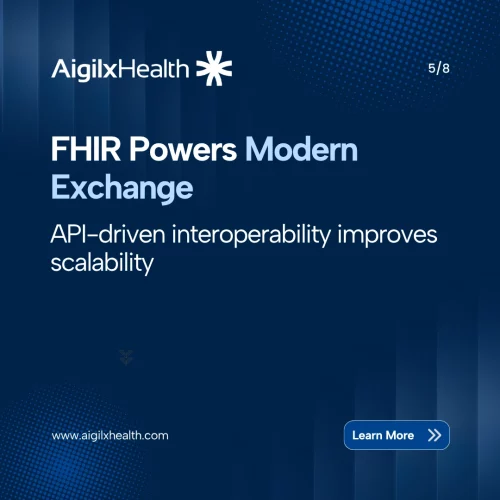
FHIR (Fast Healthcare Interoperability Resources) has become the foundation for modern interoperability.
A FHIR-first strategy enables:
- API-based exchange
- Real-time interoperability
- Scalable integrations
- Faster data retrieval
- Improved care coordination
Non-IDN hospitals should prioritize:
- FHIR-enabled APIs
- Standardized clinical data formats
- Interoperability middleware
- Modern integration architecture
FHIR reduces dependency on expensive point-to-point interfaces.
Step 4. Identify High-Impact Exchange Workflows
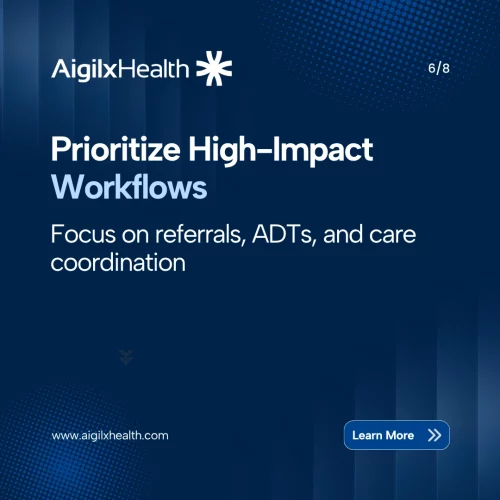
Hospitals should prioritize interoperability efforts based on operational and financial impact.
High-priority workflows include:
Referral Management
Improve referral tracking and reduce leakage.
Care Transitions
Enable seamless exchange during patient transfers.
ADT Notifications
Improve visibility into admissions, discharges, and transfers.
Prior Authorization
Reduce delays and administrative burden.
Laboratory and Imaging Exchange
Ensure timely clinical access across providers.
Revenue Cycle Data Exchange
Improve eligibility verification and claims accuracy.
Focusing on high-impact workflows delivers faster ROI.
Where Interoperability Gaps Commonly Exist
1. Referral Workflows
Many hospitals still rely on fax-based referral processes.
2. Care Coordination
Disconnected systems create fragmented patient journeys.
3. External Provider Communication
Data sharing across organizations remains inconsistent.
4. Patient Access
Patients struggle to access complete records.
5. Reporting and Analytics
Siloed systems reduce visibility into operational performance.
Step 5. Strengthen Data Governance and Standardization
TEFCA readiness requires clean, standardized, and reliable data.
Hospitals should establish governance policies for:
- Patient identity management
- Data normalization
- Terminology standards
- Access controls
- Data quality monitoring
- Compliance oversight
Without governance, interoperability initiatives create inconsistent outcomes.
Step 6. Enhance Security and Compliance Infrastructure
Nationwide data exchange increases cybersecurity and compliance risks.
Hospitals must ensure:
- HIPAA compliance
- Secure API authentication
- Identity verification
- Encryption standards
- Audit logging
- Access management policies
TEFCA participation depends heavily on trusted exchange practices.
Step 7. Develop an Integration and Connectivity Roadmap
Hospitals should avoid isolated interoperability projects.
Instead, they need a phased roadmap that includes:
- Integration priorities
- Infrastructure modernization
- API implementation timelines
- Vendor coordination plans
- Staff training initiatives
- Budget allocation
A roadmap prevents fragmented adoption and operational disruption.
Step 8. Prepare Operational Teams for Change
Interoperability transformation affects more than IT teams.
Departments requiring alignment include:
- Clinical operations
- Revenue cycle management
- Referral coordination
- Compliance teams
- Care management
- Executive leadership
Training and workflow redesign are critical for adoption success.
Step 9. Establish Real-Time Analytics and Monitoring
TEFCA readiness requires visibility into interoperability performance.
Hospitals should track:
- Referral completion rates
- API performance
- Exchange latency
- Data quality issues
- Interface failures
- Patient access metrics
Analytics enable continuous optimization.
Step 10. Partner with Experienced Interoperability Experts
Non-IDN hospitals often benefit from external guidance.
Experienced interoperability partners can help:
- Accelerate readiness
- Reduce implementation risk
- Improve integration scalability
- Simplify compliance requirements
- Optimize operational workflows
Strategic partnerships reduce the burden on internal teams.
What Are the Benefits of TEFCA Readiness?
Hospitals that successfully prepare for TEFCA gain significant advantages.
1. Improved Care Coordination
Providers gain faster access to complete patient records.
2. Reduced Administrative Burden
Automation replaces manual workflows.
3. Better Patient Experiences
Patients experience more connected care journeys.
4. Stronger Financial Performance
Interoperability reduces leakage and improves efficiency.
5. Scalable Digital Transformation
Hospitals create a foundation for future innovation.
How Aigilx Health Supports TEFCA Readiness
Aigilx Health helps non-IDN hospitals prepare for TEFCA through:
- FHIR-first interoperability strategies
- API integration and modernization
- EHR optimization
- Referral workflow automation
- Data governance frameworks
- Integration architecture support
- Real-time interoperability analytics
By aligning operational workflows with modern interoperability standards, Aigilx Health helps hospitals transition from fragmented exchange to connected healthcare ecosystems.

Why TEFCA Readiness Is a Strategic Investment
TEFCA is not simply a compliance initiative.
It represents a shift toward:
- Connected healthcare delivery
- Real-time data exchange
- Outcome-driven reimbursement
- Scalable digital operations
Hospitals that prepare early will gain competitive advantages in:
- Patient retention
- Referral management
- Financial performance
- Clinical collaboration
- Value-based care readiness
Organizations that delay interoperability modernization risk falling behind in an increasingly connected healthcare environment.
How Can Non-IDN Hospitals Move Forward with Confidence?
The path toward TEFCA readiness starts with a practical, phased strategy:
- Assess current interoperability gaps
- Modernize integration architecture
- Adopt FHIR-based exchange
- Strengthen governance and security
- Prioritize high-impact workflows
- Align operational teams
TEFCA readiness does not require massive overnight transformation.
With the right roadmap, technology strategy, and interoperability partner, non-IDN hospitals can achieve scalable, sustainable connected care.
FAQs
TEFCA is a nationwide framework designed to standardize secure healthcare data exchange across organizations and networks.
It enables better interoperability, improves care coordination, and supports value-based care initiatives.
FHIR supports API-based, real-time interoperability and standardized healthcare data exchange.
Common challenges include legacy systems, limited IT resources, fragmented workflows, and inconsistent data governance.
Hospitals should assess current systems, modernize integrations, adopt FHIR standards, and strengthen governance and security.
Aigilx Health provides interoperability consulting, FHIR integration, workflow automation, analytics, and modernization support.
Categories
- 1115 Waiver (8)
- ACO (7)
- AI (43)
- Aigilx Health (43)
- CCBHC (8)
- Control Center (10)
- FHIR Facade (7)
- FHIR Server (14)
- HIE (5)
- Payers (8)
- Providers (11)
- Rapid Fire (9)

ISO 27001:2022 Certified
Aigilx health specializes in developing Interoperability solutions to create a healthcare ecosystem and aids in the delivery of efficient, patient-centric and population-focused healthcare.