The Real Cost of Fragmented Integrations for Community Hospitals
08 May
In 2026, community hospitals are under immense pressure to do more with less deliver better patient outcomes, comply with evolving regulations, and maintain financial stability. Yet, one of the most overlooked barriers to achieving these goals is fragmented system integration.
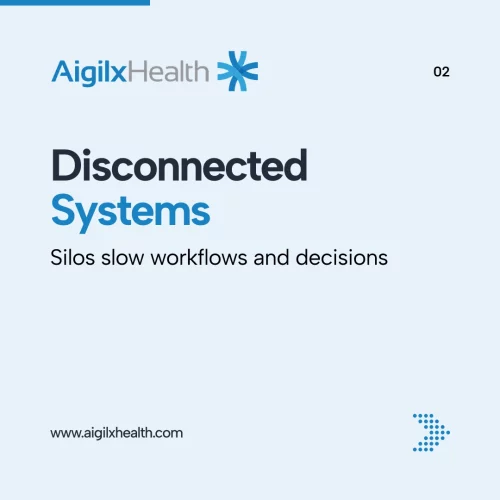
Most community hospitals operate within a patchwork of Electronic Health Records (EHRs), billing systems, lab platforms, and third-party applications. While each system serves a purpose, the lack of seamless integration between them creates hidden costs that go far beyond IT complexity.
These fragmented integrations result in delayed workflows, duplicated efforts, rising operational expenses, and missed revenue opportunities. More critically, they impact patient care and organizational agility in a healthcare environment that increasingly demands real-time data access.
This article explores the true cost of fragmented integrations, how they affect community hospitals, and the strategic steps leaders can take to turn integration into a competitive advantage.
Why Fragmented Integrations Are Still a Problem in 2026
Despite advancements in interoperability standards like FHIR and regulatory frameworks such as the 21st Century Cures Act, many community hospitals still struggle with disconnected systems.
The reason is simple: most hospitals didn’t build their tech stack from scratch they inherited it over time.
Mergers, vendor changes, budget constraints, and evolving clinical needs have resulted in a mix of legacy and modern systems that don’t naturally communicate with each other.
For hospital leadership, this leads to:
- Disconnected patient records
- Inefficient workflows
- Increased dependency on manual processes
- Rising IT maintenance costs
Fragmentation isn’t just a technical issue it’s a systemic operational challenge.
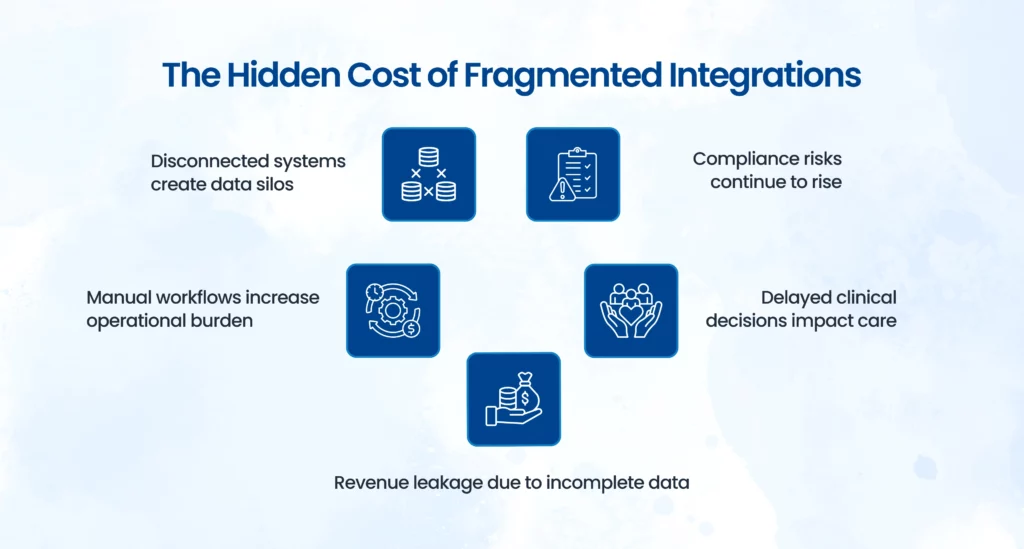
What Are the Hidden Costs of Fragmented Integrations?
1. Revenue Leakage That Goes Unnoticed
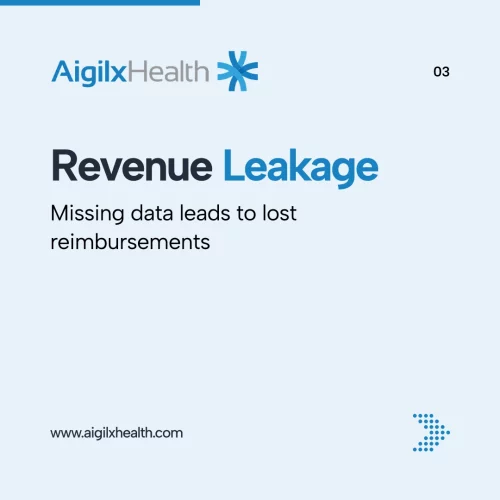
When systems don’t talk to each other, charges can slip through the cracks.
Missing documentation, delayed coding, and incomplete data transfers often result in:
- Underbilling
- Denials due to missing information
- Lost reimbursements
Over time, these small gaps compound into significant financial losses especially for community hospitals operating on tight margins.
2. Increased Administrative Burden
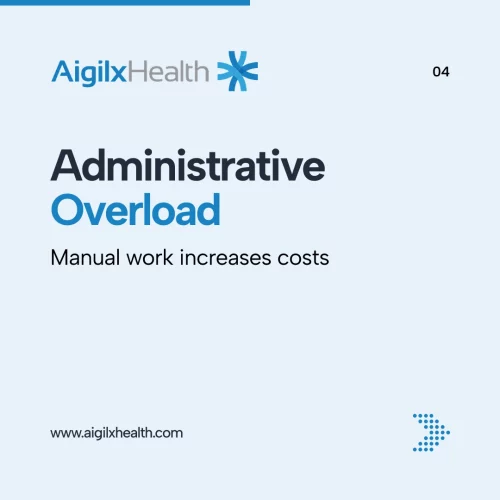
Staff spend hours manually entering or reconciling data across systems.
This leads to:
- Duplicate data entry
- Higher staffing costs
- Burnout among administrative teams
Instead of focusing on patient care or strategic initiatives, teams are stuck fixing integration gaps.
3. Delayed Clinical Decision-Making
When patient data is fragmented across systems, clinicians don’t have a complete picture.
This can result in:
- Delayed diagnoses
- Repeated tests
- Increased risk of medical errors
In critical care scenarios, even small delays can have serious consequences.
4. Compliance and Regulatory Risks
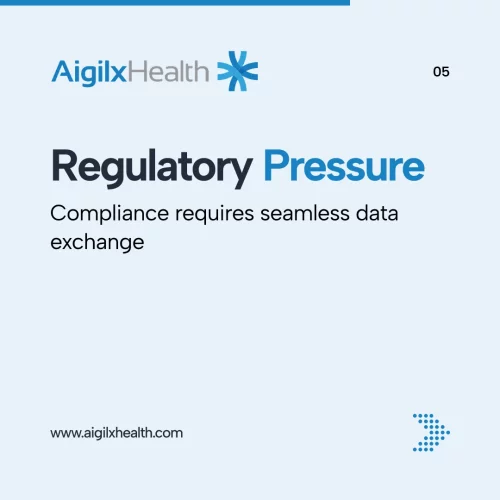
Regulations tied to interoperability such as those from the Centers for Medicare & Medicaid Services and Office of the National Coordinator for Health Information Technology require timely and secure data exchange.
Fragmented systems make it difficult to:
- Meet reporting requirements
- Ensure data accessibility
- Avoid information-blocking violations
Non-compliance can lead to penalties and reputational damage.
5. Higher IT and Maintenance Costs
Custom interfaces and point-to-point integrations require constant monitoring and updates.
Costs increase due to:
- Vendor dependency
- Interface maintenance
- Troubleshooting failures
Instead of scaling efficiently, hospitals end up spending more just to maintain the status quo.
How Fragmentation Impacts Patient Experience
Patients today expect the same level of digital convenience they experience in other industries.
Fragmented integrations lead to:
- Repeating the same information multiple times
- Delays in accessing test results
- Poor care coordination between departments
This directly affects patient satisfaction, trust, and retention areas that are increasingly tied to reimbursement and hospital ratings.
What Interoperability Requirements Are Driving Change?
1. The 21st Century Cures Act
Requires healthcare providers to ensure open and secure access to patient data while eliminating information blocking.
2. FHIR-Based APIs
Modern healthcare data exchange relies on API-driven ecosystems built on FHIR standards for real-time interoperability.
3. CMS Interoperability Rules
The Centers for Medicare & Medicaid Services continues to push for transparency and seamless data exchange between payers and providers.
4. TEFCA
A nationwide initiative to standardize secure health information exchange across networks.
These requirements are not optional they are shaping the future of healthcare operations.
Why Community Hospitals Are More Vulnerable
Unlike large health systems, community hospitals often operate with:
- Limited IT budgets
- Smaller integration teams
- Higher reliance on legacy systems
This makes it harder to modernize infrastructure quickly, increasing the long-term impact of fragmented integrations.
How Can Community Hospitals Overcome Fragmented Integrations?
1. Adopt a FHIR-First Strategy
Transition from custom interfaces to standardized, API-driven integration models.
2. Use Integration Platforms and Middleware
Modern platforms act as a bridge between legacy systems and new applications, reducing complexity.
3. Strengthen Data Governance
Ensure consistent data standards, definitions, and workflows across systems.
4. Reduce Dependency on Point-to-Point Interfaces
Move toward scalable architectures that support long-term growth.
5. Partner with Interoperability Experts
Organizations like Aigilx Health help hospitals accelerate integration, ensure compliance, and reduce operational burden.
What Role Does Technology Play in Fixing Fragmentation?
Emerging technologies are transforming how hospitals approach integration:
- Cloud-based interoperability platforms
- API ecosystems built on FHIR
- AI for data normalization and insights
- Automation tools for workflow efficiency
These innovations don’t just fix fragmentation they create opportunities for growth, efficiency, and better care delivery.
Why Fixing Fragmentation Is a Strategic Priority
Addressing fragmented integrations isn’t just about IT improvement it’s about organizational survival.
Hospitals that invest in interoperability gain:
- Faster clinical decision-making
- Improved patient outcomes
- Lower operational costs
- Stronger compliance posture
- Better financial performance
In contrast, those that delay continue to absorb hidden costs that compound over time.
How Aigilx Health Helps Community Hospitals
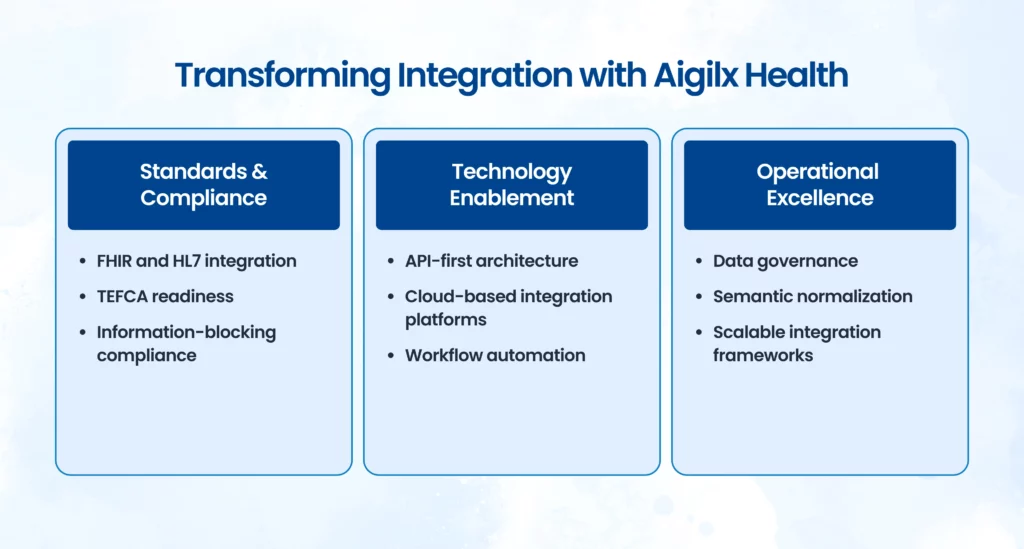
Aigilx Health enables hospitals to move from fragmented systems to connected ecosystems through:
- FHIR and HL7 integration expertise
- Legacy system modernization
- TEFCA readiness and compliance
- Data governance frameworks
- Automation and analytics solutions
The focus is not just integration but transformation.
How Can You Move Forward with Confidence?
Fragmented integrations may feel like an unavoidable reality but they don’t have to be.
With the right strategy, hospitals can:
- Eliminate data silos
- Improve operational efficiency
- Enhance patient care
- Unlock new revenue opportunities
Interoperability is no longer optional it’s foundational.
The sooner community hospitals address fragmentation, the faster they can move toward a scalable, connected future.
FAQs
Fragmented integrations happen when healthcare systems cannot seamlessly exchange data, creating disconnected workflows and information silos.
They increase operational inefficiencies, administrative workload, IT maintenance costs, and can lead to revenue leakage and delayed reimbursements.
Disconnected systems can cause incomplete patient records, delayed clinical decisions, and poor coordination between care teams.
Implementing FHIR-based APIs, centralized integration platforms, and strong data governance practices can improve interoperability.
TEFCA establishes a nationwide framework for secure, standardized health data exchange across healthcare organizations.
Aigilx Health delivers scalable interoperability solutions, integration expertise, and compliance support tailored for community hospitals.
Categories
- 1115 Waiver (8)
- ACO (7)
- AI (48)
- Aigilx Health (48)
- CCBHC (8)
- Control Center (10)
- FHIR Facade (7)
- FHIR Server (14)
- HIE (5)
- Payers (8)
- Providers (11)
- Rapid Fire (9)

ISO 27001:2022 Certified
Aigilx health specializes in developing Interoperability solutions to create a healthcare ecosystem and aids in the delivery of efficient, patient-centric and population-focused healthcare.