Rural Health Clinics & TEFCA: The Lightweight Path to Compliance
04 May
In 2026, interoperability is no longer optional it is a regulatory and operational requirement. With the rollout of the Trusted Exchange Framework and Common Agreement (TEFCA), healthcare organizations are expected to enable secure, standardized data exchange across the national ecosystem.
For rural health clinics (RHCs), however, this expectation creates a unique challenge. Limited budgets, smaller IT teams, and legacy systems make large-scale interoperability initiatives difficult to execute.
The good news is that TEFCA compliance does not require enterprise-level infrastructure. With the right strategy, rural health clinics can adopt a lightweight, scalable approach to interoperability that meets regulatory requirements without overwhelming resources.
This article explores how RHCs can navigate TEFCA, the challenges they face, and how to implement a practical, cost-effective path to compliance along with partners like Aigilx Health.
What is TEFCA and why does it matter for rural health clinics?
The Trusted Exchange Framework and Common Agreement (TEFCA) is a national initiative designed to standardize how healthcare data is shared across organizations, networks, and systems.
It aims to:
- Enable nationwide interoperability
- Improve care coordination
- Support patient access to data
- Reduce information silos
For rural health clinics, TEFCA is particularly important because it:
- Expands access to patient data from external providers
- Supports care coordination with larger health systems
- Enhances participation in value-based care models
- Strengthens compliance with federal interoperability mandates
In short, TEFCA helps rural providers connect to the broader healthcare ecosystem.
Why is TEFCA compliance challenging for rural health clinics?
While the benefits are clear, the path to compliance can feel complex for smaller organizations.
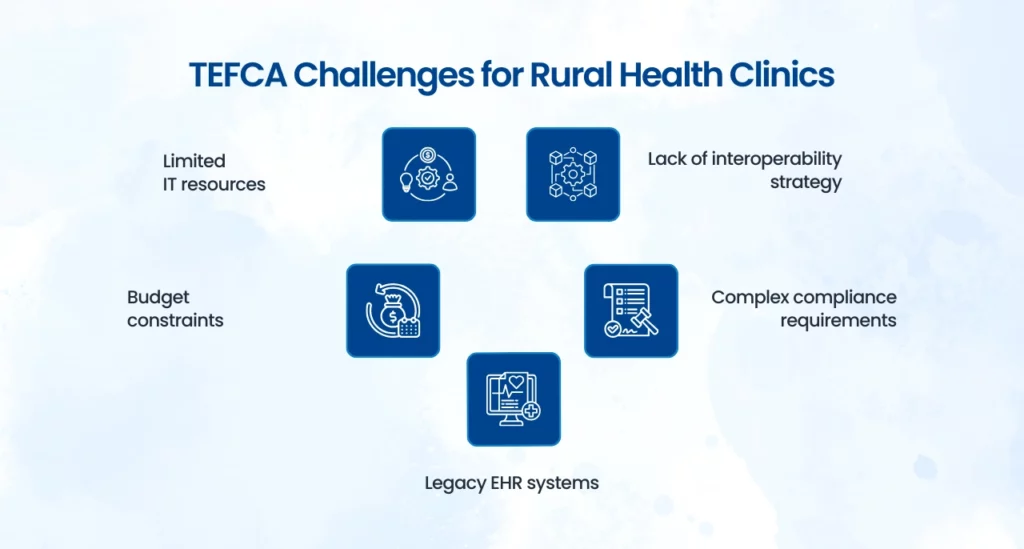
1. Limited IT Resources
Rural clinics often operate with lean IT teams that manage multiple responsibilities, leaving little capacity for large interoperability projects.
2. Budget Constraints
Capital limitations make it difficult to invest in enterprise-level integration platforms or large-scale system upgrades.
3. Legacy Systems
Many RHCs rely on older EHR platforms such as MEDITECH or eClinicalWorks, which may not fully support modern interoperability standards without additional configuration.
4. Complexity of National Frameworks
Understanding TEFCA participation models, Qualified Health Information Networks (QHINs), and compliance requirements can be overwhelming without specialized expertise.
5. Lack of Interoperability Strategy
Without a clear roadmap, clinics may struggle to prioritize initiatives or align technology with compliance goals.
These challenges can delay adoption and increase the risk of falling behind regulatory expectations.
What does a “lightweight” path to TEFCA compliance look like?
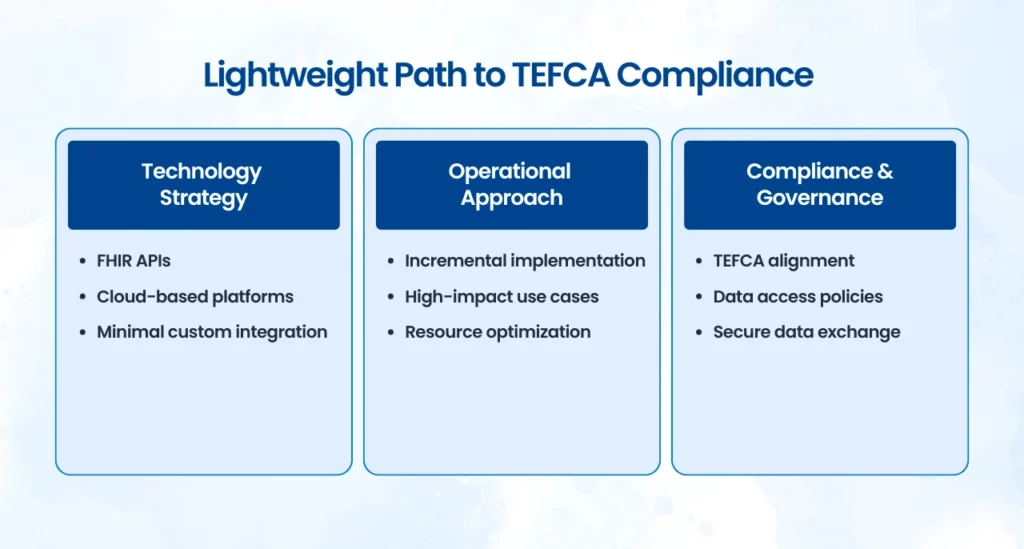
A lightweight approach focuses on simplicity, scalability, and cost-efficiency without compromising compliance.
1. API-First Interoperability
Leveraging FHIR-based APIs enables standardized, real-time data exchange without complex custom integrations.
2. Cloud-Based Integration Platforms
Cloud solutions reduce infrastructure requirements and provide scalable connectivity without heavy upfront investment.
3. Participation Through QHINs
Rather than building direct connections, clinics can connect through QHINs to access nationwide data exchange networks.
4. Incremental Implementation
Start with high-impact use cases such as:
- Patient record access
- Care transitions
- Referral data exchange
Then expand gradually as capabilities mature.
5. Minimal Custom Development
Reducing reliance on custom HL7 interfaces lowers maintenance costs and simplifies operations.
A lightweight strategy ensures that compliance is achievable without overextending resources.
How can rural health clinics implement TEFCA without disruption?
1. Assess Current Interoperability Readiness
Evaluate existing systems, integrations, and workflows to identify gaps and opportunities.
2. Align with TEFCA Requirements
Understand data-sharing obligations, security standards, and participation models.
3. Optimize Existing EHR Systems
Ensure current platforms are configured to support FHIR APIs and interoperability standards.
4. Leverage External Integration Expertise
Working with experts reduces implementation time and minimizes risk.
5. Establish Data Governance Frameworks
Define policies for data access, security, and compliance to ensure sustainable interoperability.
What role does technology play in simplifying TEFCA compliance?
Technology is the key enabler of a lightweight approach.
Key capabilities include:
- API-driven data exchange
- Cloud-based scalability
- Automated workflows
- Secure data-sharing frameworks
- Real-time access to patient information
When implemented correctly, these technologies reduce complexity while improving performance and compliance.
Why should rural health clinics prioritize TEFCA now?
Delaying TEFCA adoption can create long-term disadvantages.
Early adoption enables:
- Improved care coordination with external providers
- Better patient outcomes
- Enhanced eligibility for value-based care programs
- Reduced compliance risk
- Stronger competitive positioning
For rural clinics, TEFCA is not just a requirement it is an opportunity to expand capabilities and improve care delivery.
How Aigilx Health Enables Lightweight TEFCA Compliance
Aigilx Health helps rural health clinics achieve TEFCA compliance through:
- FHIR and API-based integration strategies
- EHR optimization and interoperability enablement
- TEFCA readiness assessments
- QHIN connectivity support
- Data governance and compliance frameworks
By focusing on scalable, cost-effective solutions, Aigilx Health enables clinics to meet regulatory requirements without unnecessary complexity.
How can you move forward with confidence?
TEFCA compliance does not have to be overwhelming.
With the right approach, rural health clinics can:
- Achieve compliance without large capital investments
- Improve data connectivity and care coordination
- Reduce operational complexity
- Enhance patient access and outcomes
- Build a foundation for future growth
The key is to adopt a lightweight, strategic approach that aligns with your organization’s capabilities and goals.

FAQs
TEFCA is a national framework that standardizes how healthcare organizations share data securely and efficiently.
While participation may vary, TEFCA aligns with broader interoperability mandates, making compliance increasingly important.
A Qualified Health Information Network (QHIN) enables organizations to connect to a nationwide data exchange network under TEFCA.
Not necessarily. A lightweight approach using cloud platforms and APIs can significantly reduce costs.
By assessing current systems, enabling FHIR APIs, and partnering with interoperability experts.
Aigilx Health provides interoperability solutions, compliance guidance, and scalable integration strategies tailored to rural health clinics.
Categories
- 1115 Waiver (8)
- ACO (7)
- AI (40)
- Aigilx Health (40)
- CCBHC (8)
- Control Center (10)
- FHIR Facade (7)
- FHIR Server (14)
- HIE (5)
- Payers (8)
- Providers (11)
- Rapid Fire (9)

ISO 27001:2022 Certified
Aigilx health specializes in developing Interoperability solutions to create a healthcare ecosystem and aids in the delivery of efficient, patient-centric and population-focused healthcare.